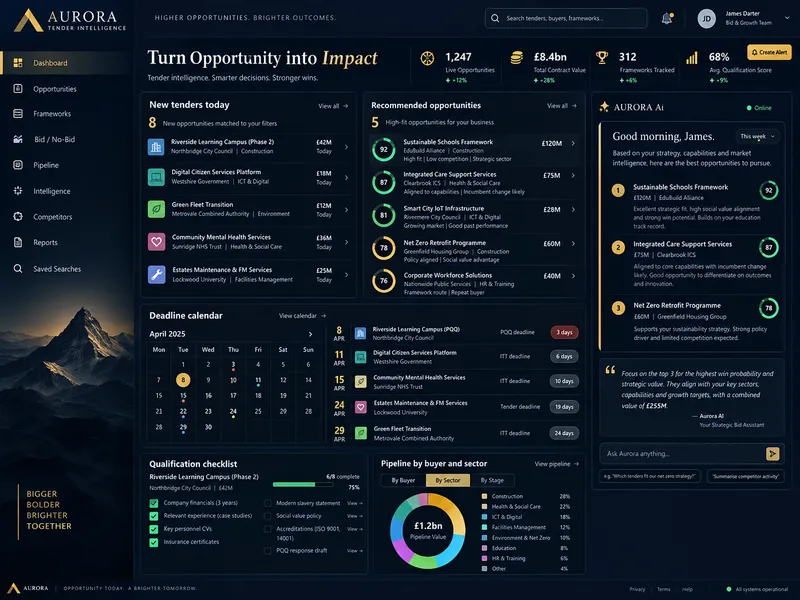
What can each role do?
Design navigation and permissions around responsibility, not a universal dashboard.
 Research BuiltRESEARCH · DESIGN · SOFTWARE
Early discovery can be unbranded. Client readouts omit participant names.
Self-service journeys and useful workspaces for customers, partners and internal teams.
A portal should make the next task easier: submit evidence, review status, find a record or make a decision. We study the roles and handoffs around that task, then design a responsive interface with clear permissions, feedback and recovery. Realistic prototypes are tested before release.
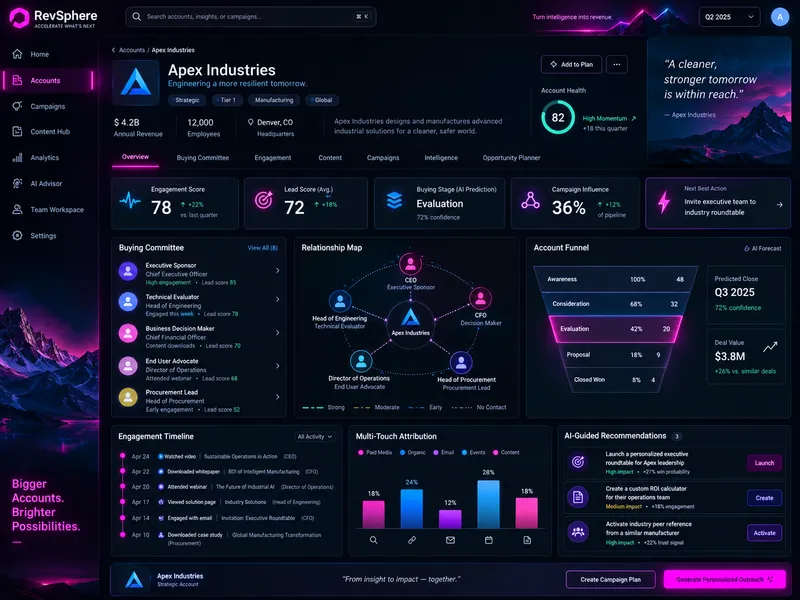
Design navigation and permissions around responsibility, not a universal dashboard.
Show progress, next action and ownership without making people chase email.
Make validation, recovery and support routes obvious.
Our research team connects the sector database, current studies and competitor insight to the design question. Project interviews and task tests establish how the response applies to your own buyers.
What we implement Observe real tasks before committing to a complex interface or workflow.
Read the original source ↗What we implement Build keyboard, contrast, focus and form access into design and acceptance checks.
Read the original source ↗Every stage ends with something the client can inspect and use to make the next decision.
Observe customers and staff; document states, permissions, data and support needs.
Prototype the key journey with authentic content, forms and error states.
Create responsive screens, authentication, access control, notifications and relevant integrations.
Review task completion, support contacts, accessibility and system health after release.
Illustrative screen comparisons show the design decisions we would test with buyers and users.
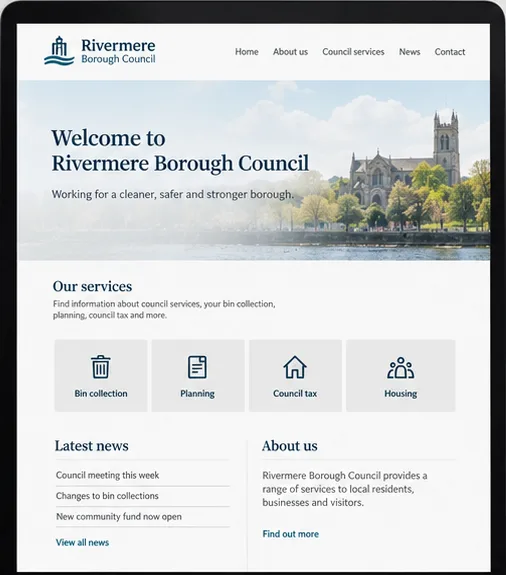
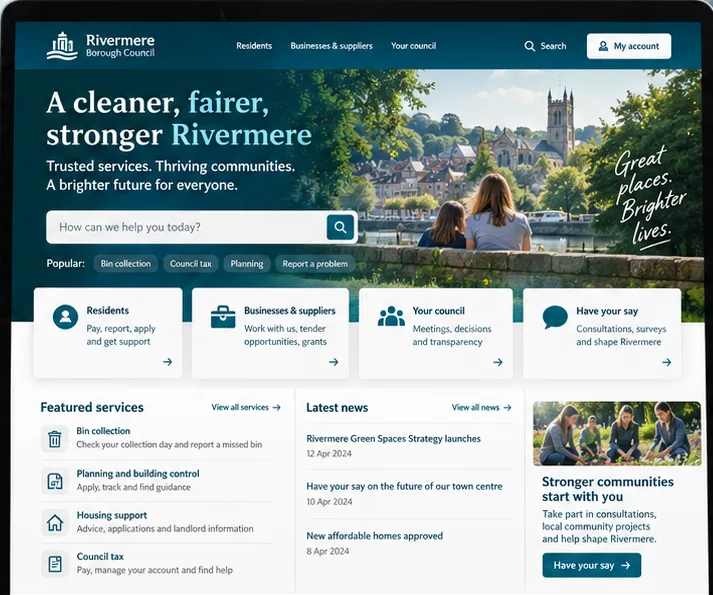
Can residents complete a common task while suppliers find the right public-sector route?
See the decisions ↗Housing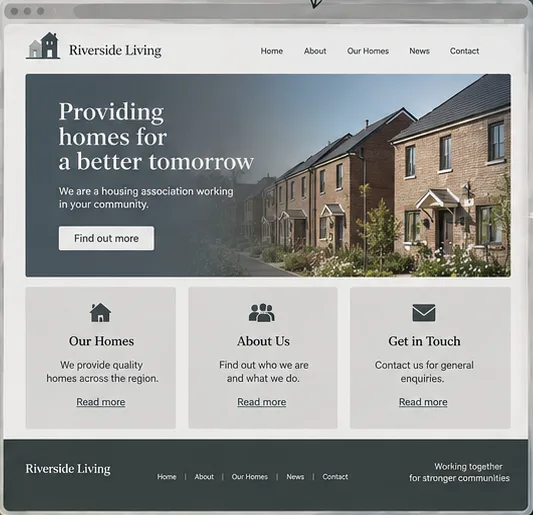
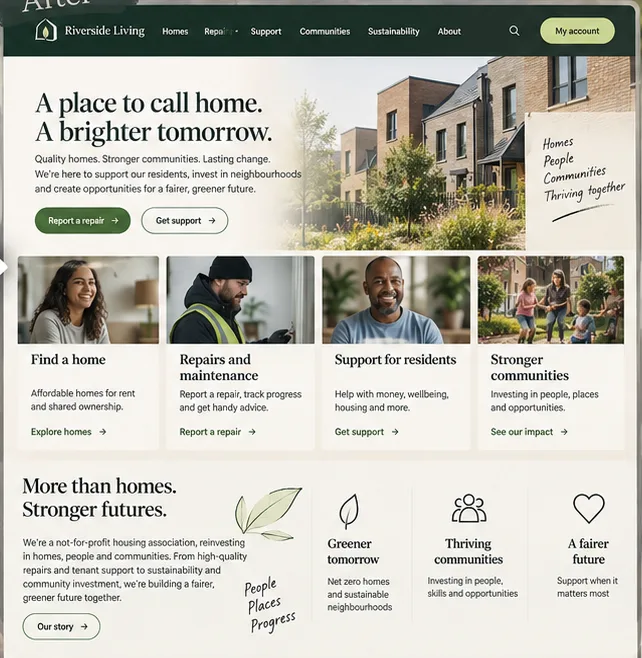
Can a resident report a repair, find support or understand housing options without searching through generic pages?
See the decisions ↗No. We decide whether sign-in is justified by the task and data, and use the least complex safe route.
Yes. The public explanation and private task space can share a coherent language and visual system while keeping access separate.
Explore the design decisions, visual directions and research process behind each collection.
Work by our creative specialists has won Orpetron Site of the Day and the 2026 WaysAwards website public-vote award.
Start with the decision your customer needs to make or the task your team needs to complete. We will scope the work around that.

Our team keeps an eye on changing markets, buyer behaviour, search habits and competing suppliers across 77 sectors. We bring that work together in our in-house sector research database, alongside current studies and the research context in our 2011–2026 reference archive.
Researchers use that shared context to shape the questions, copy, design and tests for your business. Interviews, focus groups, usability sessions and appropriate A/B tests add evidence specific to your buyers. Findings stay connected to the sector, buying role and task, so the whole website works towards the same purpose.
We build privately and take you through three review checks. Request your refund before final approval or authorised public deployment, whichever happens first, and we return 100% of covered website fees, including VAT. No questions asked.
Your peace of mind comes first. We listen to your feedback, refine the details and walk you through your website before you approve it.
We apply the ISO 9001 quality management method and the ISO/IEC 27001 information security method across research, design, development, release and ongoing improvement. Each connects the work to named owners, checks and reviewable records.
We define the buyer task and acceptance criteria, record research and design decisions, review changes, test the agreed journeys and approve the release against its requirements.
We map information flows, assess risks, choose relevant controls and review access, suppliers and changes. Backup and response checks inform the next security review.