Can you solve our precise problem?
Service and sector paths show where the offer fits before asking for a call.
 Research BuiltRESEARCH · DESIGN · SOFTWARE
Early discovery can be unbranded. Client readouts omit participant names.
A website shaped around how your buyers search, compare, build confidence and decide to enquire.
We start with the questions that stop a prospect from moving forward. Interviews, search behaviour, competing explanations and live sales conversations reveal what the website must answer. The result is an original visual and content system, built for the brand and tested against real buyer tasks.
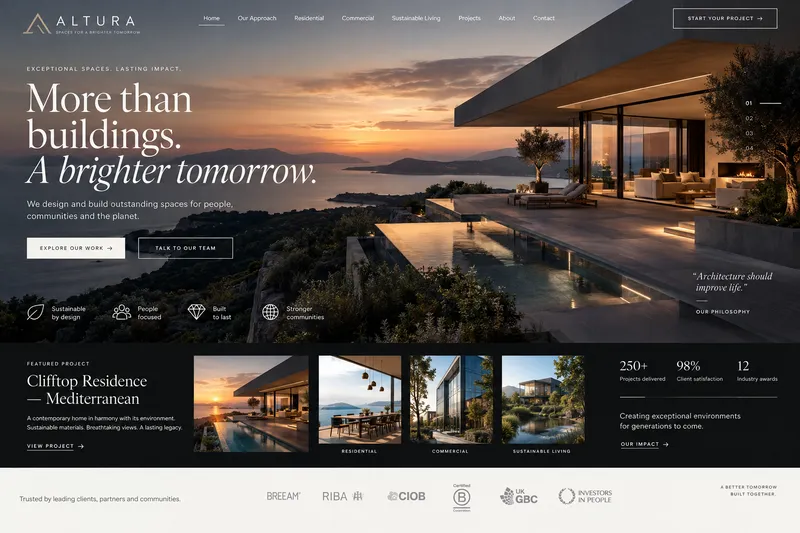
Service and sector paths show where the offer fits before asking for a call.
Relevant projects, methods and specifications sit beside the claim they support.
The next step, information needed and expected response are explicit.
Our research team connects the sector database, current studies and competitor insight to the design question. Project interviews and task tests establish how the response applies to your own buyers.
What we implement Make comparison, proof and the next step easy to find; test the route with prospective buyers.
Read the original source ↗What we implement Connect search, website, sales and service answers in one coherent information architecture.
Read the original source ↗Every stage ends with something the client can inspect and use to make the next decision.
Interview prospective buyers, map search intent and review existing enquiries. Separate the first question from later procurement checks.
Create original page structures, responsive art direction and content hierarchies. Show the offer, evidence and action in the order buyers need them.
Develop accessible pages with semantic structure, purposeful internal links, technical metadata and a coherent sitemap.
Give realistic tasks to target users; watch where they hesitate. Check the live enquiry route, speed and accessibility before release.
Illustrative screen comparisons show the design decisions we would test with buyers and users.
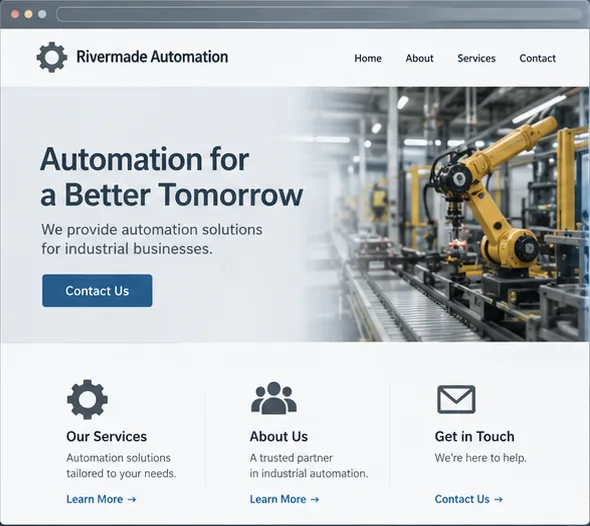
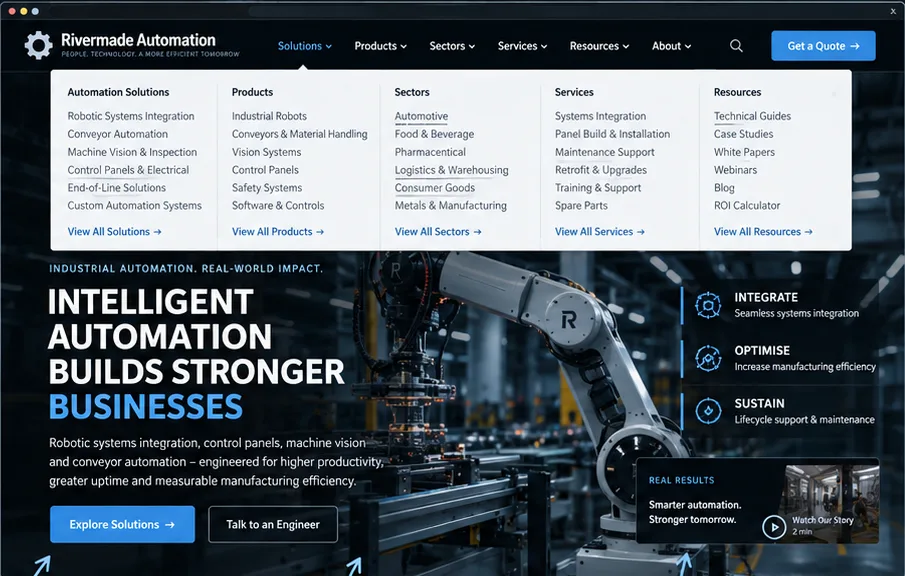
Can an engineering team see which automation capability fits its line, integration needs and operating goals?
See the decisions ↗Commercial insurance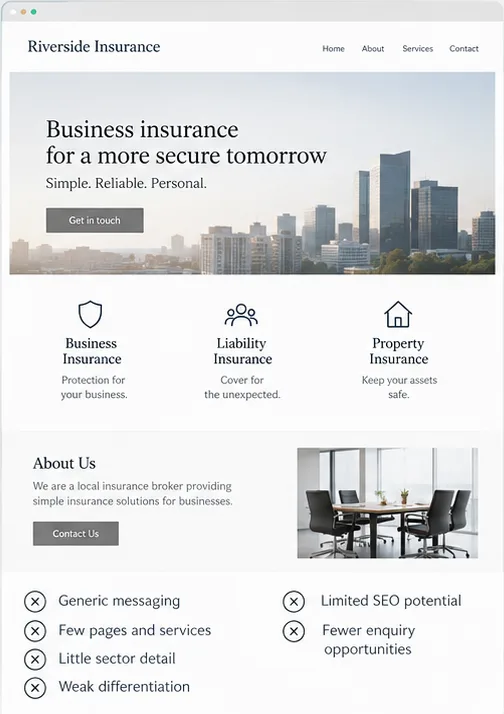
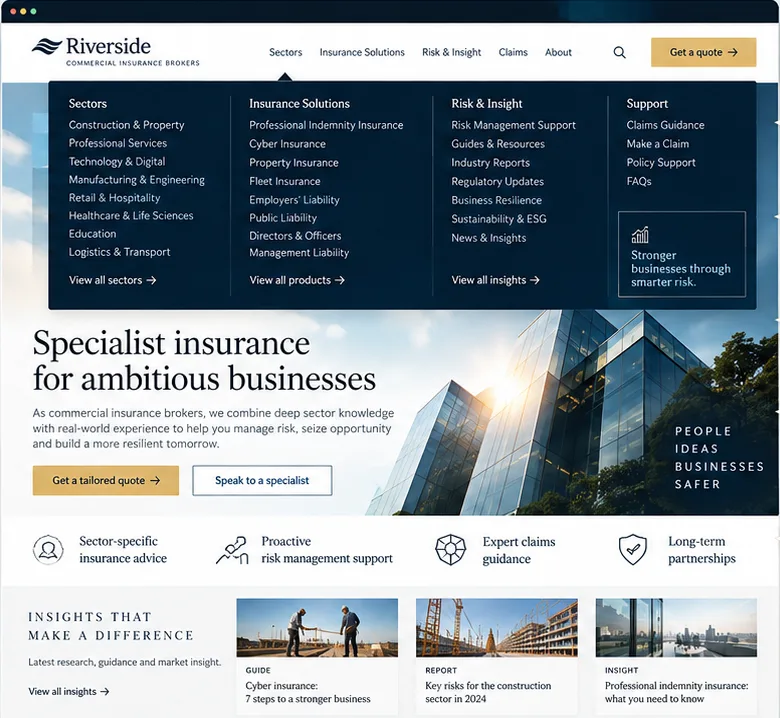
Can a business identify relevant cover, sector expertise and the support it would receive when a claim arises?
See the decisions ↗No. The page hierarchy, copy, image direction and components are designed around the business and the questions its buyers bring.
Yes. We plan content families and reusable components so new sectors, evidence and services can be added without losing the overall logic.
Explore the design decisions, visual directions and research process behind each collection.
Work by our creative specialists has won Orpetron Site of the Day and the 2026 WaysAwards website public-vote award.
Start with the decision your customer needs to make or the task your team needs to complete. We will scope the work around that.

Our team keeps an eye on changing markets, buyer behaviour, search habits and competing suppliers across 77 sectors. We bring that work together in our in-house sector research database, alongside current studies and the research context in our 2011–2026 reference archive.
Researchers use that shared context to shape the questions, copy, design and tests for your business. Interviews, focus groups, usability sessions and appropriate A/B tests add evidence specific to your buyers. Findings stay connected to the sector, buying role and task, so the whole website works towards the same purpose.
We build privately and take you through three review checks. Request your refund before final approval or authorised public deployment, whichever happens first, and we return 100% of covered website fees, including VAT. No questions asked.
Your peace of mind comes first. We listen to your feedback, refine the details and walk you through your website before you approve it.
We apply the ISO 9001 quality management method and the ISO/IEC 27001 information security method across research, design, development, release and ongoing improvement. Each connects the work to named owners, checks and reviewable records.
We define the buyer task and acceptance criteria, record research and design decisions, review changes, test the agreed journeys and approve the release against its requirements.
We map information flows, assess risks, choose relevant controls and review access, suppliers and changes. Backup and response checks inform the next security review.