BUYER RESEARCH, HANDLED WITH CARE

Early discovery can be unbranded. Client readouts omit participant names.

THE RESEARCH OBSERVATORY / 2011–2026

Understand your buyers.
Build what matters.

Our team connects current sector intelligence, competitor insight and buyer research in one shared database. Explore fifteen years of research context and see how that knowledge becomes original content, useful design and a website aligned with your audience.

SOURCE EDITION REVIEWED / 28 SEPTEMBER 2026

Cinematic visualisation of people discussing a website prototype through layered glass in a research studio
Real questions.
A different way to build.
15years of published research context
33reviewed sources in this research edition
77connected sector research paths
9market families in the shared database
THE EVIDENCE OBSERVATORYBegin with the buyer
0%
START WITH THE DECISION

A good website answers
the question that matters.

Before a colour, a headline or a page layout, there is a person trying to make a decision. They may be checking a technical fit, preparing a shortlist or explaining a choice to a colleague.

Our researchers connect sector intelligence, competitor insight and buyer research to that real buying work. The shared database gives the project context. Interviews reveal the decision, observed tasks reveal the friction, and testing checks whether the new website makes the next step clearer.

A QUESTION TO INVESTIGATE“What would you need to see before putting this supplier on your shortlist?”
PEOPLE → PATTERNS → PAGES

The signal is human.
The website should be, too.

Look beyond a click. Explore how a buying question becomes an observation, a pattern and a deliberate website decision.

01 / OBSERVEBUYER QUESTION → WEBSITE DECISION
Move across the field to explore the people within it.
FOLLOW A BUYING QUESTION

“Will this work with our existing systems?”

Watch where a prospective buyer looks for compatibility, what they compare and what they still need to ask. The useful evidence is the task, the hesitation and the missing answer.

WHAT TO RECORD
Buyer role · existing setup · comparison criteria · observed uncertainty
THE NEXT QUESTION
Which information would let this person assess fit without having to guess?
Follow the evidence into the build ↗
THE EVOLUTION / LATEST FIRST

A 15-year archive.
Explore the turning points.

This timeline follows published research and service-design practice from 2011 to 2026. Each chapter keeps its original date, audience and source; our application shows the website decision it informs.

2026The connected, AI-aware buying journey
THE PUBLISHED SHIFT

A website now sits inside a wider decision system: search, comparisons, people, procurement and increasingly AI assistance.

OUR DESIGN RESPONSE

Make product facts, service scope, technical evidence and next steps coherent across pages and sales tools. Test both the buyer's independent route and the hand-off to a person.

2025Trust, shortlist entry and information consistency
THE PUBLISHED SHIFT

Self-directed buying raised the importance of clear information before a sales conversation, with consistency across channels a visible research concern.

OUR DESIGN RESPONSE

Investigate what buyers need before contacting a supplier. Turn that into useful comparison pages, accessible evidence and a contact route that preserves their context.

2024A wider set of channels, a single expectation
THE PUBLISHED SHIFT

McKinsey's survey described a ten-channel journey, compared with five channels in its 2016 baseline.

OUR DESIGN RESPONSE

Research the transitions: a specification found in search, a procurement check, a conversation and a return visit. Carry the same facts and terminology through each route.

2022Omnichannel becomes the operating model
THE PUBLISHED SHIFT

A multinational B2B survey connected buyer expectations to in-person, remote and digital self-service choices.

OUR DESIGN RESPONSE

Choose the useful next action for each task: read, compare, calculate, request a quote, book a conversation or reorder. The appropriate action depends on the decision.

2020Remote research and digital buying accelerate
THE PUBLISHED SHIFT

Pandemic-era studies observed an abrupt move towards digital self-service and remote human engagement.

OUR DESIGN RESPONSE

Bring interviews and observed tasks online when appropriate. Preserve the wider context: phone calls, shared files, operational urgency and the people who approve the purchase.

2018Design is evaluated alongside business performance
THE PUBLISHED SHIFT

A five-year study connected company design practices with financial performance across three industries.

OUR DESIGN RESPONSE

Translate design into reviewable requirements and outcomes. Measure whether buyers can understand, assess and act; connect those measures to qualified demand and service performance.

2016The customer experience extends beyond a brochure
THE PUBLISHED SHIFT

B2B digital analysis highlighted customer-facing capability rather than digitising internal operations alone.

OUR DESIGN RESPONSE

Investigate the buying job. Replace a list of services with a route through specification, suitability, proof and action, supported by the systems behind the interface.

2015B2B discovery becomes visibly multi-format
THE PUBLISHED SHIFT

Google and Millward Brown studied B2B researchers' search, mobile and video behaviour, alongside desktop clickstream data.

OUR DESIGN RESPONSE

Give different questions their own clear answers. Test terminology with the people using it, and make the same answers usable on a small screen or during a shared buying discussion.

2013User needs become traceable records
THE PUBLISHED SHIFT

GOV.UK documented work on a needs register connecting a need, the content meeting it and its performance.

OUR DESIGN RESPONSE

Record the buyer question, its supporting evidence, the page decision and the test. A new page earns its place by answering a specific need.

2012User needs and iteration become explicit principles
THE PUBLISHED SHIFT

UK government design principles put user needs, data and iteration at the centre of service design.

OUR DESIGN RESPONSE

Observe the whole task, including offline steps. Make the difficult decision easier to understand, and include people with different access needs in the research.

2011The research-before-choice era takes shape
THE PUBLISHED SHIFT

Google's consumer study examined the information gathered before a choice. It supplies historical context rather than a B2B conversion benchmark.

OUR DESIGN RESPONSE

Look upstream of the contact form: the question that starts the search, the comparisons made and the evidence sought. Recheck that pattern with today's sector buyers.

A PUBLISHED CHANGE / CHANNELS

The route to a decision
has become wider.

A website has to carry useful context between discovery, technical evaluation, colleagues and a conversation. Counting channels is the starting point; researching the transitions is the practical work.

McKinsey’s 2024 publication compares the 2016 and 2024 survey averages. The 2026 report also gives an average of ten channels.

2024 survey and historical comparison ↗2026 B2B Pulse ↗
52016
102024
102026
Published survey averages across the buying journey.
PRIMARY + SECONDARY / TWO CONNECTED EVIDENCE ROUTES

Know where the evidence starts.
Know what it can answer.

Primary and secondary describe the origin of the evidence. Qualitative and quantitative describe how it is examined. Attitudes and behaviour describe what is observed or reported. A research plan can combine all three dimensions.

PRIMARY RESEARCH

Ask and observe the relevant people.

Collect fresh evidence for a defined buying task. Recruit prospective buyers and users from the actual target group, capture what happens, then connect the finding to a website requirement and a retest.

SECONDARY RESEARCH

Inspect the evidence already available.

Review published studies, existing records, sector intelligence and public discussion. Keep the source context visible and use it to sharpen the question for this offer and audience.

The distinctionPrimarySecondary
Where it startsNew evidence collected for the defined project question.An existing study, dataset, publication or recorded experience.
Website examplesA buyer interview, an observed prototype task or a randomised live experiment.Published buyer surveys, sector guidance, search records, public reviews or previous project findings.
What it contributesDirect context for this audience, task, offer and version of the website.History, patterns, terminology, technical changes and questions worth investigating.
What we recordRecruitment, role, consent, setting, task, version, observation and result.Publisher, original date, sample, method, scope, retrieved date and intended application.
How it connectsTest a sector question or check a proposed response against real buying work.Frame the question, compare existing findings and identify a need for fresh evidence.
QUALITATIVE / REPORTED EXPERIENCE

Understand the account

Buyer interviews, group discussion and diary reflection explore language, decision context and differences between roles.

QUANTITATIVE / REPORTED EXPERIENCE

Measure stated views

A well-defined survey estimates reported priorities in its sample. Recruitment and question wording stay with the result.

QUALITATIVE / OBSERVED BEHAVIOUR

Watch the task

Contextual observation and moderated usability reveal routes, confusion, workarounds and the conditions around a decision.

QUANTITATIVE / OBSERVED BEHAVIOUR

Evaluate the outcome

Instrumented tasks, journey data and controlled experiments measure defined actions and compare their frequency.

Our application of the method distinctions described by Nielsen Norman Group. Existing analytics or a previous study can be secondary evidence for a new brief; a newly instrumented project study collects primary evidence.

Professionals evaluating information in a financial services setting
THE PEOPLE BEHIND THE PURCHASE

A job title is only
the beginning.

An end user, technical reviewer, budget holder and procurement colleague can look at the same website for different reasons. We research the task and the decision each person has to make.

That changes the content: compatibility for one role, delivery confidence for another, and a clear commercial next step for the person bringing the group together.

Follow the buyer research journey ↗
INTERACTIVE / CHOOSE THE QUESTION FIRST

The right question
selects the method.

Choose a decision below to explore a connected research route. The mix is adapted to the buying group, the available evidence and the version of the experience being evaluated.

RESEARCH PHASE
DISCOVERY
THE QUESTION
What causes this buying group to shortlist, reject or contact a supplier?
THE OUTPUT
A role-specific buyer-task map, evidence gaps, decision criteria and a content brief.
THE VERIFICATION
Screen for the actual purchase, record counterexamples and compare new accounts with the published evidence.
16 METHODS / THE QUESTION / THE RECORD / THE DECISION

Open the method.
Follow its practical use.

This is our applied guide for website projects. Each method names a suitable moment, a working procedure, its evidence record and the decision it can help evaluate.

01 / Secondary · qualitative + quantitative

Secondary evidence review

WHEN TO USE IT
Discovery and whenever the market changes.
HOW WE APPLY IT
Compare dated studies, source populations, purchase values, geography and the question each study actually asked.
THE RESEARCH RECORD
A source register with relevance, findings, competing explanations and review triggers.
THE WEBSITE DECISION
A researched brief identifying what the project must learn next.
HOW TO VERIFY THE READING
Keep a large global sample attached to its original audience. Its average is context for a sector question.
Method context / GOV.UK Service Manual ↗
02 / Secondary · observed public evidence

Competitor and search landscape

WHEN TO USE IT
Positioning, content architecture and search planning.
HOW WE APPLY IT
Map competitors' offers, content, search-result appearances, comparison information, reviews, directories and public social profiles. Record the page and check date.
THE RESEARCH RECORD
An intent map, public-presence inventory and evidence gaps to investigate.
THE WEBSITE DECISION
Distinct answers to buyer questions, connected to the right commercial page.
HOW TO VERIFY THE READING
Search visibility, paid placements and sales results are separate measures. Use account or licensed data for actual performance.
Method context / Google Search Central ↗
03 / Secondary · qualitative patterns

Public discussion and review analysis

WHEN TO USE IT
Before interviewing and during market monitoring.
HOW WE APPLY IT
Examine public questions and reviews for recurring terminology, frustrations and alternatives. Preserve the setting and distinguish customers, suppliers and commentators.
THE RESEARCH RECORD
Coded topics and source links, followed by questions for relevant buyers.
THE WEBSITE DECISION
An interview guide and a content vocabulary to validate.
HOW TO VERIFY THE READING
A visible discussion is a source of questions. Check whether its people and circumstances match the purchase being designed.
Method context / GOV.UK Service Manual ↗
04 / Primary · qualitative · reported experience

Buyer interviews

WHEN TO USE IT
When the purchase, shortlist or objection is unclear.
HOW WE APPLY IT
Ask a screened buyer to reconstruct a recent decision, including sources, colleagues, exclusions and unresolved questions. Follow concrete events before asking for opinions.
THE RESEARCH RECORD
Participant codes, purchase roles, session notes and evidence-linked findings.
THE WEBSITE DECISION
Messaging, proof, comparison and contact requirements.
HOW TO VERIFY THE READING
Explore a real event and the counterexamples. Keep the researcher's interpretation separate from the participant's account.
Method context / GOV.UK Service Manual ↗
05 / Primary · qualitative · attitudes

Moderated buyer discussion

WHEN TO USE IT
When shared language and disagreement within a buying group matter.
HOW WE APPLY IT
Gather individual reflections before discussion, compare purchase criteria and invite quieter roles to explain their reasoning. The moderator investigates differences.
THE RESEARCH RECORD
Themes, role differences, disputed priorities and vocabulary.
THE WEBSITE DECISION
Candidate messages and evaluation criteria for individual task testing.
HOW TO VERIFY THE READING
Discussion records what people say in that setting. Observe usability separately with realistic individual tasks.
Method context / GOV.UK Service Manual ↗
06 / Primary · qualitative · behaviour

Contextual observation

WHEN TO USE IT
When documents, equipment, interruptions or offline steps affect the journey.
HOW WE APPLY IT
Observe the relevant work setting: a specification check, care referral, procurement preparation or recurring order. Ask about the materials and constraints around the screen.
THE RESEARCH RECORD
A task map connecting people, screens, documents and operational steps.
THE WEBSITE DECISION
A website or workflow that fits how the work is actually done.
HOW TO VERIFY THE READING
Record the observer's presence and the setting. Recheck a proposed change in the intended use context.
Method context / GOV.UK Service Manual ↗
07 / Primary · qualitative · repeated experience

Diary and longitudinal research

WHEN TO USE IT
When a purchase or service unfolds across days or weeks.
HOW WE APPLY IT
Invite participants to record agreed events over time, then follow up on changes, gaps and workarounds. Use a practical schedule matched to the process.
THE RESEARCH RECORD
Dated entries and a follow-up account of how needs developed.
THE WEBSITE DECISION
Content and tools for return visits, evaluation pauses and post-purchase work.
HOW TO VERIFY THE READING
Track missed entries and participant effort; distinguish a remembered account from a contemporaneous observation.
Method context / Nielsen Norman Group ↗
08 / Primary · exploratory information structure

Card sorting

WHEN TO USE IT
When the content's grouping and vocabulary are unsettled.
HOW WE APPLY IT
Ask relevant people to group useful information and explain their labels. Compare how technical evaluators, procurement and commercial sponsors organise it.
THE RESEARCH RECORD
Grouping patterns, proposed names and differences by role.
THE WEBSITE DECISION
A candidate content hierarchy and menu vocabulary.
HOW TO VERIFY THE READING
A grouping preference is followed by a findability task before the navigation is approved.
Method context / Nielsen Norman Group ↗
09 / Primary · behavioural · findability

Tree testing

WHEN TO USE IT
After a hierarchy is proposed and before visual polish.
HOW WE APPLY IT
Give a concrete goal in a text-based hierarchy. Observe the chosen route, destination and any backtracking without supplying the category name.
THE RESEARCH RECORD
Correct destination, route, difficulty and interpretation of labels.
THE WEBSITE DECISION
A navigation structure buyers can use to locate necessary answers.
HOW TO VERIFY THE READING
Keep tasks neutral and include realistic competing destinations. Then retest the complete interface.
Method context / Nielsen Norman Group ↗
10 / Primary · qualitative · understanding

Message and concept comprehension

WHEN TO USE IT
Before committing to a proposition, headline or visual explanation.
HOW WE APPLY IT
Show the proposed page or concept and ask the person to explain the offer, intended customer, evidence and next step in their own words.
THE RESEARCH RECORD
What was understood, confused, recalled and still missing.
THE WEBSITE DECISION
Clearer positioning, original copy and useful visual hierarchy.
HOW TO VERIFY THE READING
A preference vote and an accurate explanation answer different questions. Evaluate comprehension directly.
Method context / GOV.UK Service Manual ↗
11 / Primary · behavioural + qualitative

Moderated usability testing

WHEN TO USE IT
Whenever a prototype or working journey needs evaluation.
HOW WE APPLY IT
Give an achievable buying task and watch the person attempt it. Record the route, errors, assistance, understanding and outcome before exploring the reasons.
THE RESEARCH RECORD
Task records linked to the exact screen, version and purchase role.
THE WEBSITE DECISION
Specific corrections to content, navigation, forms and interactions.
HOW TO VERIFY THE READING
The task should describe the goal without naming the control. Compare the revised experience against the same acceptance requirement.
Method context / GOV.UK Service Manual ↗
12 / Primary · behavioural · structured tasks

Unmoderated task studies

WHEN TO USE IT
When stable tasks need broader exposure across relevant users.
HOW WE APPLY IT
Prepare the task, prototype, completion criteria and recording conditions. Pilot the instructions, then review the observed routes and structured responses.
THE RESEARCH RECORD
Task outcomes and recordings matched to participant screening and device.
THE WEBSITE DECISION
Prioritised usability issues and comparisons between audience segments.
HOW TO VERIFY THE READING
A pilot checks whether the instructions are understood. Review exclusions, recording failures and task ambiguity before interpreting results.
Method context / Nielsen Norman Group ↗
13 / Primary · quantitative · reported views

Buyer surveys

WHEN TO USE IT
After qualitative work has identified questions worth measuring.
HOW WE APPLY IT
Define the eligible population, purchase role and neutral questions. Pilot the survey, record how people were recruited and analyse differences by relevant segment.
THE RESEARCH RECORD
Responses, question wording, sample composition and response conditions.
THE WEBSITE DECISION
An estimate of reported priorities within the defined sample.
HOW TO VERIFY THE READING
Keep stated intention distinct from completed action. The recruitment method determines which population the estimate can describe.
Method context / Nielsen Norman Group ↗
14 / Primary measurement + existing records

Search and journey measurement

WHEN TO USE IT
Before release and throughout live improvement.
HOW WE APPLY IT
Define consent-aware events and inspect search queries, landing pages, useful actions and enquiry quality. Separate branded discovery, topic research and commercial intent.
THE RESEARCH RECORD
A measurement plan, event checks, search exports and segmented journey records.
THE WEBSITE DECISION
A prioritised improvement question with a known baseline.
HOW TO VERIFY THE READING
A visit or click is an observation, not a causal explanation. Follow the pattern with a task study or controlled test.
Method context / Microsoft Research ↗
15 / Primary · quantitative · controlled behaviour

Randomised A/B experiments

WHEN TO USE IT
When two credible alternatives and enough relevant exposure exist.
HOW WE APPLY IT
Predefine eligibility, a useful outcome, important guardrails, allocation and a stopping rule. Check instrumentation and analyse the effect with uncertainty and enquiry quality.
THE RESEARCH RECORD
Variant versions, exposure, outcomes, quality checks and the release decision.
THE WEBSITE DECISION
Evidence of a change's effect under the tested conditions.
HOW TO VERIFY THE READING
Concurrent randomised testing differs from comparing two calendar periods. Record other changes and investigate conflicting measures.
Method context / Microsoft Research ↗
16 / Primary task evidence + technical review

Accessibility and assistive-technology tasks

WHEN TO USE IT
During design, before launch and after relevant changes.
HOW WE APPLY IT
Review semantic structure, keyboard routes, focus, forms, zoom and motion. Observe relevant tasks with people using appropriate access methods.
THE RESEARCH RECORD
Technical findings, task barriers, affected journeys and retest results.
THE WEBSITE DECISION
An understandable, operable route across access needs.
HOW TO VERIFY THE READING
Combine automated checks, manual inspection and real tasks; each exposes a different part of the experience.
Method context / GOV.UK Service Manual ↗
THE SCIENTIFIC WORKING CYCLE / TRACEABLE & REPEATABLE

A finding becomes useful
when its reasoning is inspectable.

Scientific application starts with a question and follows evidence through collection, analysis, challenge and retesting. A website decision keeps the context of the study that supported it.

01

Define a falsifiable question

Name the sector, purchase role, task and decision. Write a hypothesis that evidence could challenge, including the result that would make the team revise its current explanation.

02

Design the comparison

Choose a suitable method, recruitment plan, task and measure. For an experiment, predefine allocation, exposure, guardrails and a stopping rule; for qualitative work, define the context and questions to explore.

03

Capture a recoverable record

Keep consent and identities separate from working findings. Retain source dates, session codes, screen versions, neutral task wording, events and analysis decisions under the agreed access and retention plan.

04

Look for competing explanations

Compare roles and contexts, keep contradictions, review measurement errors and inspect alternative accounts. Distinguish a correlation, a preference, an observed failure and an experimental effect.

05

Triangulate and test again

Use a different evidence route to investigate the same decision. A survey may suggest an objection; an interview explains its context; an observed task checks the proposed answer; a live comparison examines an effect.

06

Approve, monitor and revisit

Document the decision, conditions, remaining question, owner and next review trigger. A new policy, changed product, repeated support issue or fresh market signal reopens the relevant research record.

PUBLIC STUDY→BUYER ACCOUNT→OBSERVED TASK→RETESTED DECISION

The chain is a working research route. Study context and uncertainty remain part of the record, and the team can inspect why a response was chosen.

THE RECORD BEHIND THE WEBSITE

Every finding needs
a traceable route.

A research database is useful when a team can inspect where a finding came from, which buyers it applies to and what changed because of it. Here is the record structure used to connect the work.

01

Frame the question

Write the buying task, sector, role, geography and decision to be made. Attach existing studies and identify the question that needs fresh primary evidence.

RESEARCH BRIEF · STUDY ID · SOURCE LINKS
02

Capture the evidence

For primary work, record the session date, participant code, role, task and observed behaviour. Recordings follow the agreed consent and access plan. Public-source records retain publisher, original date, audience and retrieval date.

SESSION NOTES · SOURCE EXTRACT · CONTEXT
03

Analyse without losing the detail

Separate observations from interpretations. Group patterns, keep counterexamples and mark where roles or sectors differ. A quotation supports a finding only when its source and context can be recovered.

OBSERVATION → FINDING → CONTEXT
04

Turn a finding into a decision

Connect the finding to a page, content requirement, interaction or software workflow. Name the change and the question it is expected to answer. Set the acceptance test before polishing the interface.

FINDING ID · PAGE DECISION · ACCEPTANCE TASK
05

Test and close the loop

Retest comprehension and task completion with the relevant audience. Use live experiments where the traffic and design support them. Record the result, remaining questions, owner and next review trigger.

VALIDATION · DECISION LOG · NEXT REVIEW
PRIVATE PRIMARY RESEARCH

People are coded. Context stays useful.

Keep contact and consent details apart from working findings. A client readout can identify the purchase role and relevant context without exposing a participant’s name. Early discovery can be unbranded; participants still know they are taking part in research.

Research data and privacy guidance ↗
PUBLIC SECONDARY RESEARCH

Original dates remain visible.

Keep publication date, data-collection period and review date as separate fields. A 2026 report edition may have been published in 2025; an updated guidance page is different from a newly conducted buyer survey.

Recording research sessions ↗
TEAM RESEARCH / MARKET → SECTOR → BUYER

Our team follows the change.
Research shapes the response.

Market developments are one input to our connected sector research database. Researchers compare current studies with competitor positioning, search questions and buyer behaviour, then connect what matters to the relevant market and task. The original research notes below illustrate how a development becomes a research question and a testable website decision.

  1. CaptureSource, date, topic and original URL.
  2. CheckRead the original and establish its scope.
  3. ConnectName the sector, buyer and affected task.
  4. HypothesiseState a consequence that can be investigated.
  5. EvaluateChoose the observation, task or experiment.
  6. ReviewRecord the result and the next trigger.
GOOGLE SEARCH CENTRAL / 2026-09-24

Visual search: research the buyer behind the image

Can a buyer who arrives through a product or project image establish what it is, whether it fits and how to ask a useful question?

METHOD TO APPLY

Contextual buyer interviews, image-entry usability tasks and an eligible Search Console baseline.

Follow the research question ↗
W3C / 2026-09-25

Accessibility: follow the complete buying task

Can people using different access methods compare the service, inspect its evidence and complete the enquiry?

METHOD TO APPLY

Standards review, manual inspection and usability tasks with appropriate access methods.

Follow the research question ↗
AWS / 2026-09-25

Research recordings: map the information journey

Who can access a research recording, its transcript and the findings derived from it at each handoff?

METHOD TO APPLY

Information-flow mapping, supplier review, access checks and a retrieval-and-deletion exercise.

Follow the research question ↗
WEBKIT / 2026-09-17

Browser change: retest the commercial journey

Does the buyer still understand and complete the route when the browser, input method or screen changes?

METHOD TO APPLY

A defined browser matrix, functional checks and observed mobile buying tasks.

Follow the research question ↗
TETRALOGICAL / 2026-09-22

The accessibility tree: inspect what a form communicates

Can someone identify each enquiry field, understand an error and know whether the request was accepted?

METHOD TO APPLY

Semantic inspection, keyboard checks and assistive-technology task testing.

Follow the research question ↗
CLOUDFLARE / 2026-09-22

Caching: verify the version the buyer actually receives

Does every participant receive the intended page version, language and content when an experiment or personalisation is evaluated?

METHOD TO APPLY

Delivery inspection, a versioned test matrix and experiment instrumentation checks.

Follow the research question ↗

An engineering setting with industrial equipment and a technical workplace
THE CONTEXT CHANGES THE QUESTION

Research has to fit
the working world.

A specification check in manufacturing is different from a care referral or a software security review. Documents, responsibilities and the consequences of a wrong choice shape what a useful website must explain.

Explore the sector planner to see how the audience, evidence, search question and task change together. Each brief connects the information to a practical website response.

Explore a sector research plan ↓
9 MARKET FAMILIES / 77 DISTINCT BRIEFS

Sector context changes
the research question.

An engineer checking tolerances, a commissioner assessing a care pathway and a procurement team reviewing security are making different decisions. These research plans start with those differences.

Public systems sector setting01

Public systems

People and purchase roles
Commissioners, procurement teams, operational users and people accessing the service.
Secondary evidence
Procurement notices, service statistics, accessibility duties and published service plans.
Primary research and tasks
Map eligibility and procurement separately. Observe how users find ownership, responsibilities and the next step.
Useful measures
Task completion, correct route selection, accessibility and completeness of an enquiry.
Explore a sector research plan ↗
Care & place sector setting02

Care & place

People and purchase roles
Commissioners, care professionals, referral teams, residents and carers, selected for the actual service.
Secondary evidence
Service criteria, quality reports, local provision, care pathways and housing service information.
Primary research and tasks
Use sensitive individual interviews and accessible tasks to test eligibility, reassurance, referrals and urgent/non-urgent routes.
Useful measures
Understanding of service fit, correct referral, accessible completion and appropriate contact.
Explore a sector research plan ↗
Learning & impact sector setting03

Learning & impact

People and purchase roles
School leaders, procurement teams, educators, learners, funders and delivery partners.
Secondary evidence
Education plans, evaluation reports, funding conditions and evidence of learning or programme outcomes.
Primary research and tasks
Compare how decision makers assess outcomes and implementation. Test whether staff, learners and funders can each find their route.
Useful measures
Evidence comprehension, programme fit, successful applications or qualified enquiries.
Explore a sector research plan ↗
Digital infrastructure sector setting04

Digital infrastructure

People and purchase roles
Technical evaluators, security reviewers, commercial sponsors, procurement and day-to-day users.
Secondary evidence
Product specifications, integration documentation, security guidance and current technology developments.
Primary research and tasks
Observe a shortlist and integration check. Separate the sponsor's business question from the engineer's technical validation.
Useful measures
Correct compatibility decisions, proof discovery and quality of technical enquiries.
Explore a sector research plan ↗
Built environment sector setting05

Built environment

People and purchase roles
Asset owners, contractors, facilities teams, specifiers, residents and commissioning organisations.
Secondary evidence
Scope specifications, safety guidance, asset information, project stages and maintenance obligations.
Primary research and tasks
Walk through a real specification and document trail. Test coverage, remedial responsibilities and evidence retrieval.
Useful measures
Correct scope interpretation, specification readiness, document findability and suitable requests.
Explore a sector research plan ↗
Energy & nature sector setting06

Energy & nature

People and purchase roles
Project developers, asset operators, procurement, engineers, landowners and environmental specialists.
Secondary evidence
Sector plans, technical evidence, delivery constraints, environmental claims and published project requirements.
Primary research and tasks
Observe suitability and claim verification. Compare how people assess technical fit, project readiness and delivery responsibilities.
Useful measures
Accurate fit decisions, evidence comprehension and completeness of project enquiries.
Explore a sector research plan ↗
Movement & making sector setting07

Movement & making

People and purchase roles
Engineers, operations teams, purchasing, quality managers, logistics planners and end users.
Secondary evidence
Specifications, materials, capacity, certification scope, service levels and supply-chain developments.
Primary research and tasks
Test a realistic part, process or freight requirement. Watch how buyers check capacity, tolerances, timing and exceptions.
Useful measures
Specification completeness, correct fit, quote readiness and reduced clarification loops.
Explore a sector research plan ↗
Advisory & operations sector setting08

Advisory & operations

People and purchase roles
Business owners, finance teams, procurement, service users, legal reviewers and operational sponsors.
Secondary evidence
Service scope, fee structures, professional guidance, implementation evidence and sector-specific buyer questions.
Primary research and tasks
Interview roles separately before exploring a shared decision. Test scope, responsibility, confidentiality and the first action.
Useful measures
Service understanding, quality of intake and fit of the opportunities created.
Explore a sector research plan ↗
Creative commerce sector setting09

Creative commerce

People and purchase roles
Buyers, brand teams, procurement, store or catalogue users, event teams and fulfilment partners.
Secondary evidence
Product specifications, order constraints, campaign requirements, delivery information and market signals.
Primary research and tasks
Observe comparison, configuration and fulfilment decisions. Trace the route from a creative impression to a usable commercial brief.
Useful measures
Correct product choice, complete specifications, checkout or enquiry completion and delivery understanding.
Explore a sector research plan ↗
INTERACTIVE / SECTOR RESEARCH PLANNER

Change the sector.
Watch the research change.

Explore the research brief for any of the 77 fields. This is a planning view: the commissioning brief and fresh buyer evidence determine the final study and build.

Digital infrastructure

Software, SaaS and cloud

Software, SaaS and cloud sector setting
THE BUYER'S QUESTION
Can this product integrate and show value in my workflow?
FRICTION TO INVESTIGATE
Feature lists defer proof until a sales call
WHO TO RESEARCH
Technical evaluators, security reviewers, commercial sponsors, procurement and day-to-day users.
PRIMARY RESEARCH PLAN
Observe a shortlist and integration check. Separate the sponsor's business question from the engineer's technical validation.
SEARCH QUESTIONS TO CHECK
use case, integration, pricing and security
WEBSITE RESPONSE
Role-led product site with sandbox and docs
A TASK TO PROTOTYPE
workflow demo with integration map
HOW TO EVALUATE IT
Correct compatibility decisions, proof discovery and quality of technical enquiries.
METHODS / MATCH THE QUESTION

Listening and watching
reveal different things.

Opinions, observed behaviour and live experimental outcomes are different evidence. We choose the method that can answer the decision question, then connect it to the other records.

MethodQuestionRecordUseful output
Secondary researchWhat does published evidence suggest?Dated studies, sector reports, public guidance and source context.A hypothesis and a question for this buyer group.
Online listeningWhich language and objections recur?Public discussions, reviews and consented feedback, with setting and date.Topics to investigate with the relevant audience.
Individual interviewsHow was the decision actually made?Recent experience, sources used, constraints and decision roles.A map of the purchase and its unresolved needs.
Focus groupsWhere do attitudes and criteria differ?Moderated discussion, individual reflections and disagreement.Audience language and competing evaluation priorities.
Contextual observationWhat surrounds the task?The work setting, interruptions, documents and offline steps.A journey that includes the operational reality.
Usability testingCan the person complete and understand it?Observed tasks, errors, assistance and comprehension.A specific interface or content change to test again.
Controlled A/B testingWhat difference does a live change make?Randomised variants, defined outcomes and quality checks.An effect estimate, with uncertainty and guardrail review.
THE PUBLIC EVIDENCE REGISTER

Find the evidence.
Inspect the context.

Search by publisher, topic or year. Surveys, company analysis and method guidance are kept distinct so the source can be matched to the decision.

33 source records

2026 / CMI / MarketingProfsSurvey

B2B content and marketing trends: insights for 2026

The report separates AI productivity gains from content performance, with 87% reporting better productivity and 39% better content performance among AI content users.

Publication / edition
8 October 2025; 2026 report edition
Audience / method
1,015 B2B marketers; marketer-reported experiences
Read the original source ↗
2026 / McKinseySurvey

The new survival threshold in B2B growth

Buyers used ten channels on average. 71% of B2B companies offered e-commerce; for those offering it, digital channels contributed roughly a third of revenue.

Publication / edition
28 May 2026
Audience / method
Nearly 4,000 decision makers; 13 countries; multiple industries
Read the original source ↗
2026 / GartnerResearch abstract

The AI-driven future of B2B buying

Gartner's synthesis connects website improvement, trust in sellers and buyer reliance on AI as linked commercial questions.

Publication / edition
25 June 2026
Audience / method
Public research synthesis; digital platforms, trust and AI
Read the original source ↗
2026 / Google Search CentralGuidance

Optimising for generative AI features on Google Search

Core SEO remains relevant. Google describes grounding and query fan-out, and rejects the idea that special AI files or a fixed page length are required.

Publication / edition
Updated 10 July 2026
Audience / method
Official Search guidance; discovery, content and measurement
Read the original source ↗
2026 / McKinseyAnalysis

How growth champions rewire sales with AI

The analysis moves from isolated AI pilots to connected commercial workflows, customer knowledge and the changing role of sellers.

Publication / edition
16 July 2026
Audience / method
2026 B2B Pulse plus interviews with revenue leaders
Read the original source ↗
2026 / Nielsen Norman GroupGuidance

Accelerating research with AI

AI can assist preparation and analysis, while the article keeps real participants and human observation central to usability work.

Publication / edition
27 September 2024; reviewed 21 January 2026
Audience / method
UX research practice; AI-assisted planning and analysis
Read the original source ↗
2026 / GOV.UK Service ManualMethod

Contextual research and observation

Contextual observation examines the environment, materials and interruptions surrounding a task, including work away from the screen.

Publication / edition
Current guidance; reviewed September 2026
Audience / method
People working in their real setting
Read the original source ↗
2026 / GOV.UK Service ManualMethod

Analyse a research session

Organise observations, identify patterns and produce findings that teams can act on, retaining a connection to the underlying session evidence.

Publication / edition
Current guidance; reviewed September 2026
Audience / method
Session evidence; analysis and findings
Read the original source ↗
2026 / Nielsen Norman GroupMethod

When to use which user-experience research methods

The framework separates behaviour from reported attitudes and qualitative understanding from quantitative measurement, with context and project phase informing selection.

Publication / edition
17 July 2022; reviewed 15 July 2026
Audience / method
Method selection; behaviour, attitudes, measurement and context
Read the original source ↗
2026 / Nielsen Norman GroupMethod

Tree testing: evaluate menu labels and categories

Tree testing examines whether people can find information in a hierarchy, helping distinguish label and category problems from visual-design problems.

Publication / edition
6 August 2023; reviewed 19 August 2026
Audience / method
Task-based navigation evaluation; a proposed content hierarchy
Read the original source ↗
2026 / GOV.UK Service ManualMethod

Learning about users and their needs

Existing records, interviews and observation inform user needs, which remain connected to delivery decisions and are revisited throughout a service's development.

Publication / edition
Current guidance; reviewed 28 September 2026
Audience / method
Discovery, design and live service research
Read the original source ↗
2025 / GartnerResearch abstract

Website features that B2B buyers want

Gartner reports 76% of B2B buyers would avoid suppliers providing bad website experiences, highlighting comparison and implementation support.

Publication / edition
11 July 2025
Audience / method
Published abstract; B2B website expectations
Read the original source ↗
2025 / GartnerSurvey

Buyer preferences for digital self-service and seller support

61% preferred an overall rep-free experience; 69% reported inconsistencies between website and seller information. Buyers still sought contextual seller guidance.

Publication / edition
25 June 2025; fieldwork August–September 2024
Audience / method
632 B2B buyers; reported preferences
Read the original source ↗
2025 / 6senseSurvey

2025 B2B Buyer Experience Report

The winning vendor was on the initial shortlist in 95% of reported purchases. Sector composition and purchase scale matter when applying the result.

Publication / edition
12 November 2025
Audience / method
Just under 4,000 buyers; technology and services prominent
Read the original source ↗
2025 / Google Search CentralGuidance

Content in Google's AI search experiences

Original, useful content, a sound page experience and accessible information remain important as search questions become more complex.

Publication / edition
21 May 2025
Audience / method
Search publisher guidance; website content and discovery
Read the original source ↗
2025 / Financial Conduct AuthorityReview

Digital design in customers' online journeys

The review examined customer understanding, digital presentation, testing and oversight of financial-services journeys.

Publication / edition
31 July 2025; updated 3 December 2025
Audience / method
Financial-services acquisition journeys; a small group of firms
Read the original source ↗
2024 / McKinseySurvey

Five fundamental truths: how B2B winners keep growing

The survey reported ten interaction channels on average, compared with five in 2016, and examined digital, remote and in-person buying.

Publication / edition
12 September 2024
Audience / method
Nearly 4,000 decision makers; 34 sectors; 13 countries
Read the original source ↗
2024 / Nielsen Norman GroupMethod

Card sorting: uncover users' mental models

Card sorting explores how participants group information. The resulting organisation can then be evaluated through navigation tasks.

Publication / edition
2 February 2024
Audience / method
Information architecture; grouping and naming content
Read the original source ↗
2023 / Microsoft ResearchMethod

Experimentation and the North Star Metric

An experiment should connect the feature being changed to an important user outcome, with care when interpreting conflicting measures.

Publication / edition
5 September 2023
Audience / method
Power Automate example; randomised A/B experimentation
Read the original source ↗
2022 / McKinseySurvey

The new B2B growth equation

Buyers expected connected in-person, remote and self-service routes, with convenience and personalisation across the journey.

Publication / edition
23 February 2022
Audience / method
About 3,500 decision makers; 12 markets
Read the original source ↗
2021 / Microsoft ResearchMethod

Patterns of trustworthy experimentation: during the experiment

A test needs outcome, diagnostic, data-quality and guardrail measures, so a local improvement does not hide a wider problem.

Publication / edition
25 January 2021
Audience / method
Online controlled experiments; metrics and data quality
Read the original source ↗
2020 / McKinseySurvey

Eight charts on the change in B2B sales

The pandemic accelerated remote selling and digital self-service. Buyer and seller preferences were tracked during a period of major disruption.

Publication / edition
14 October 2020
Audience / method
Global B2B decision makers during the pandemic
Read the original source ↗
2018 / McKinseyAnalysis

The business value of design

Stronger design practices correlated with stronger financial performance. The research covered medical technology, consumer goods and retail banking.

Publication / edition
25 October 2018
Audience / method
300 listed companies; five years; three industries
Read the original source ↗
2018 / GOV.UK Service ManualMethod

Researching in small group workshops

Group work can expose shared decisions and disagreements. The guidance distinguishes workshops from focus groups and from individual usability testing.

Publication / edition
28 June 2018; current guidance
Audience / method
Small-group discovery; joint decisions and experiences
Read the original source ↗
2018 / GOV.UK Service ManualMethod

Managing research data and participant privacy

Collect what the research question needs, establish retention, and protect identities when sharing findings.

Publication / edition
Current guidance; reviewed September 2026
Audience / method
Personal data in research; collection, access and retention
Read the original source ↗
2017 / GOV.UK Service ManualMethod

Using in-depth interviews

A prepared discussion guide helps explore experiences consistently while leaving room for the participant's own account.

Publication / edition
21 February 2017; current guidance
Audience / method
Individual research; real experiences and needs
Read the original source ↗
2017 / GOV.UK Service ManualMethod

Using moderated usability testing

Moderated tasks examine how people use a service. The researcher watches the participant's route rather than supplying the answer.

Publication / edition
21 February 2017; updated 3 October 2017
Audience / method
Observed individual tasks; prototypes and services
Read the original source ↗
2017 / GOV.UK Service ManualMethod

Taking notes and recording research sessions

Detailed session records support later analysis; consent and secure handling apply to notes and recordings as well as final reports.

Publication / edition
Current guidance; reviewed September 2026
Audience / method
Research notes, recordings and participant consent
Read the original source ↗
2016 / McKinseyAnalysis

How B2B digital leaders drive five times more revenue growth

The analysis connected customer-facing digital capability with stronger company performance, extending attention beyond internal process digitisation.

Publication / edition
10 October 2016
Audience / method
Company digital capabilities; comparative business analysis
Read the original source ↗
2015 / Google / Millward Brown DigitalSurvey

The Changing Face of B2B Marketing

The study examined search, mobile and video in business buying, finding an average of 12 searches before engagement with a specific brand site.

Publication / edition
March 2015
Audience / method
About 3,000 B2B researchers; survey and desktop clickstream
Read the original source ↗
2013 / Government Digital ServicePractice

A tool to capture user needs and measure performance

The Maslow project connected a recorded user need to the content serving it and to performance at the level of that need.

Publication / edition
25 October 2013
Audience / method
GOV.UK needs register; delivery practice
Read the original source ↗
2012 / Government Digital ServiceGuidance

Government Design Principles

User needs, data, iteration and whole-service context became explicit design principles, with accessibility and inclusion central to the work.

Publication / edition
3 April 2012; updated 2 April 2025
Audience / method
UK public services; design principles
Read the original source ↗
2011 / Google / Shopper SciencesSurvey

Winning the Zero Moment of Truth

Early digital research mapped the information people consult before choosing. This is consumer context, kept separate from B2B buyer samples.

Publication / edition
2011
Audience / method
5,000 shoppers; 12 categories; consumer research
Read the original source ↗
OUR TEAM / CONTINUOUS SECTOR RESEARCH

The market moves.
Our team keeps looking.

Researchers keep an eye on changing buyer expectations, competitor positioning, search habits and sector conditions. We connect current studies, market observations and project research in the same database, keeping the sector, buying role and website decision aligned.

01 / LISTEN

Online and offline context

Public discussions, trade events, support questions, consented interviews and operational observation can reveal new language, objections and unmet tasks. Record the source and setting; discuss a recurring pattern with the relevant buyers.

02 / REVIEW

Check the right evidence

Compare a fresh signal with published research, sector guidance and the client’s actual buying roles. Check whether the finding still applies to the offer, geography, purchase value and task being designed.

03 / VALIDATE

Test the change in context

Revise the affected answer or journey, then run a comprehension or usability task. Use analytics and controlled tests to examine the live result. Keep the date, decision and next research question in the record.

One connected research database. All 77 sectors.

Market observations, competitor insight, search questions and primary and secondary research are organised by sector, buying role and task. Our team uses that shared record to prepare project questions, connect findings and revisit decisions as markets change. News is one public window into the work.

Explore the sector research database ↗

Current news provides examples of market context. Explore the matching sector to connect each development to buyer questions and website decisions.

QUESTIONS WORTH ASKING

Understand the method.
Then inspect the work.

Why keep older studies?

They reveal how a pattern developed and give a baseline for new questions. The original year remains visible. Current sector evidence and primary studies determine whether an older finding still applies to the work being commissioned.

Does a large global survey answer every sector question?

It offers market context. Sector, country, purchase value, buying role and study method decide how closely it fits the brief. A technical compatibility question or sensitive care journey needs its own task and audience evidence.

How do you tell an attractive design from a useful one?

Set realistic tasks and ask the buyer to explain what they found. Observe whether the visual hierarchy helps them notice the right answer, compare fit and take an appropriate action. Keep the visual direction that works for the audience and the goal.

What if interview opinions conflict with live behaviour?

Keep both records and investigate the context. A participant’s preference, an observed task and a live action measure answer different questions. The next study can test which explanation fits rather than discarding an inconvenient finding.

What happens when traffic is too low for an informative A/B test?

Prioritise observed usability, comprehension, suitable enquiry quality and instrumentation. Plan a controlled experiment around a meaningful effect and sufficient exposure. A small set of conversions should not be presented as conclusive evidence of a winner.

How does the research affect bespoke content?

Buyer language shapes headings and navigation. Comparison criteria shape scope and proof. Search questions shape useful pages. Observed confusion shapes explanations and interactions. Each has a record and a task against which the result can be reviewed.

RESEARCH FIRST / BESPOKE BY DESIGN

Make the buyer’s decision
the centre of your website.

Start with the offer, sector and buying task. We connect the research, original content, design and validation into a clear route to a working website.

Start your research-led website ↗
BROCHURE → BUYER JOURNEY

Trace the buyer question into the website.

The visual shift follows a specific buyer question. Open each example for the method, page decision and test.
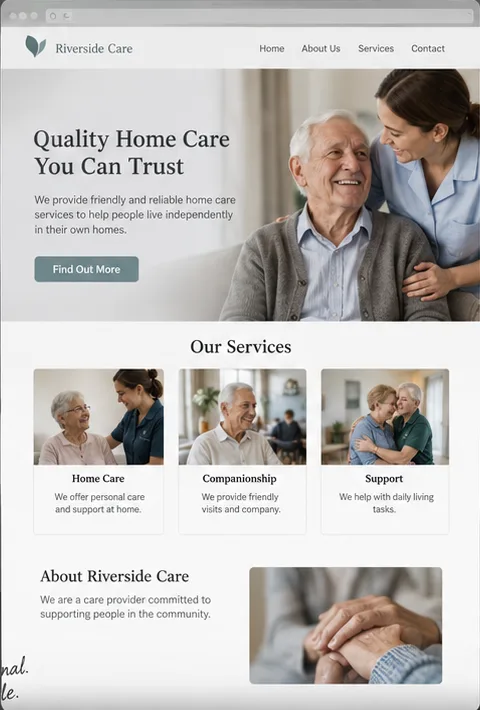
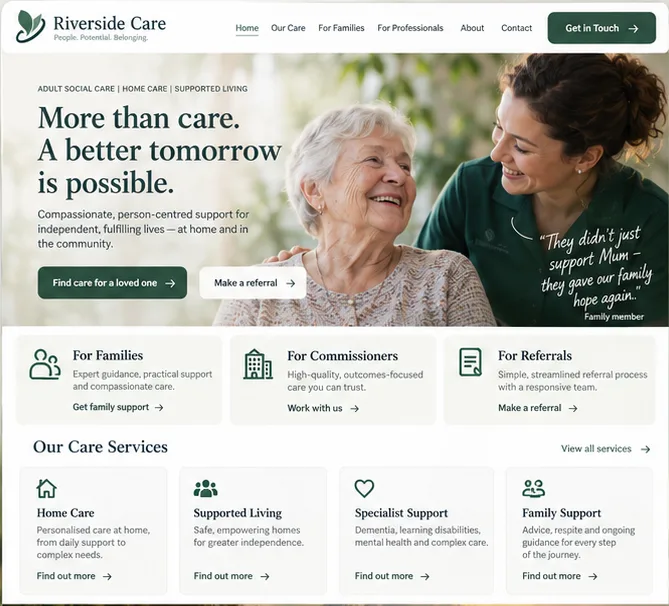
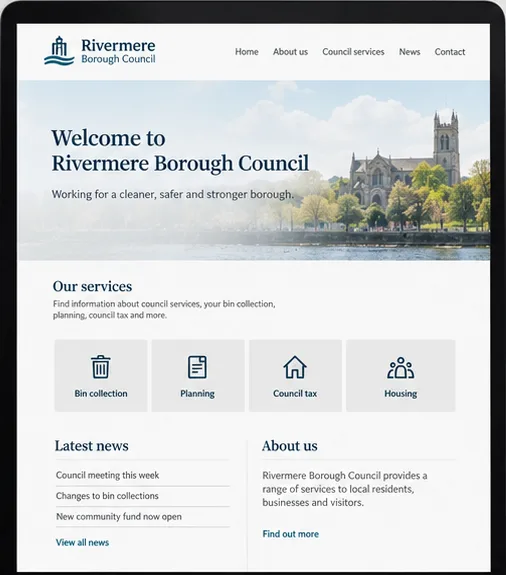
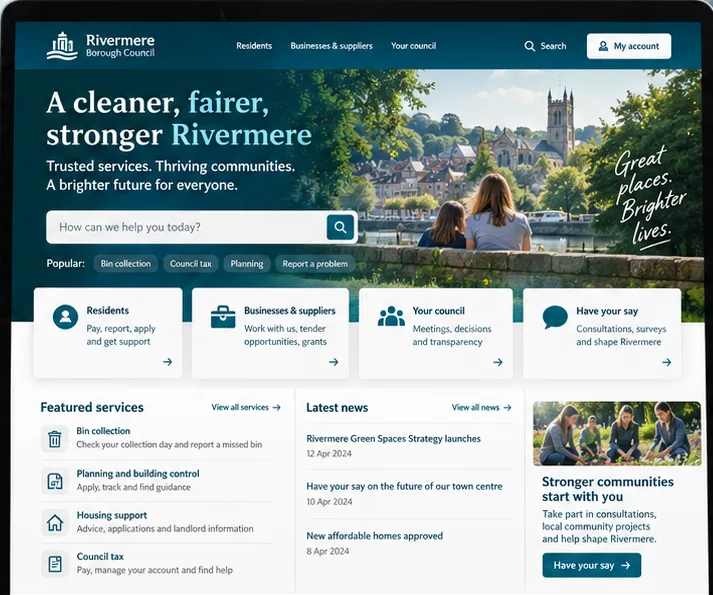
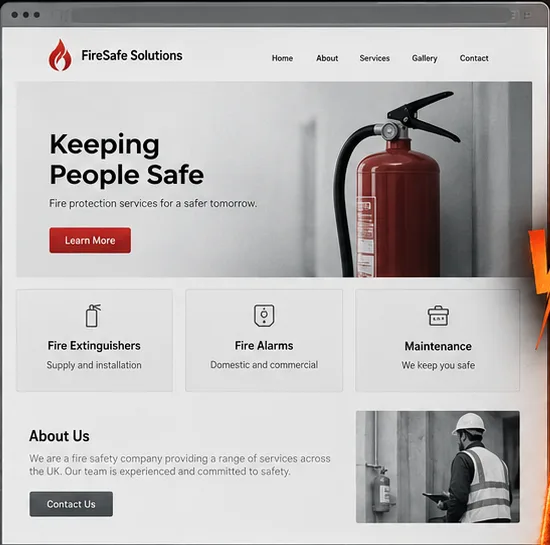
Explore all 30 before-and-after examples ↗
Glass lenses organise fine cyan threads into a clear pathway
EvidenceBuyer contextTested decisions
PEOPLE + SECTOR INTELLIGENCE / ONE CONNECTED RESEARCH DATABASE

Your sector. Your buyers. A researched path.

Our team keeps an eye on changing markets, buyer behaviour, search habits and competing suppliers across 77 sectors. We bring that work together in our in-house sector research database, alongside current studies and the research context in our 2011–2026 reference archive.

Researchers use that shared context to shape the questions, copy, design and tests for your business. Interviews, focus groups, usability sessions and appropriate A/B tests add evidence specific to your buyers. Findings stay connected to the sector, buying role and task, so the whole website works towards the same purpose.

SATISFACTION GUARANTEE / REVIEW BEFORE FINAL APPROVAL

Review with confidence. Approve when you are happy.

We build privately and take you through three review checks. Request your refund before final approval or authorised public deployment, whichever happens first, and we return 100% of covered website fees, including VAT. No questions asked.

Your peace of mind comes first. We listen to your feedback, refine the details and walk you through your website before you approve it.

See how the guarantee works ↗
IMPLEMENTED THROUGHOUT OUR DELIVERY PROCESS

Quality and security are part of how we deliver.

We apply the ISO 9001 quality management method and the ISO/IEC 27001 information security method across research, design, development, release and ongoing improvement. Each connects the work to named owners, checks and reviewable records.

ISO 9001 / QUALITY

Requirements become checked, approved work.

We define the buyer task and acceptance criteria, record research and design decisions, review changes, test the agreed journeys and approve the release against its requirements.

  1. Define
  2. Review
  3. Test
  4. Approve
  5. Improve
See how we implement ISO 9001 ↗
ISO/IEC 27001 / INFORMATION SECURITY

Information and access follow a controlled route.

We map information flows, assess risks, choose relevant controls and review access, suppliers and changes. Backup and response checks inform the next security review.

  1. Map
  2. Assess
  3. Control
  4. Verify
  5. Improve
See how we implement ISO/IEC 27001 ↗
CURIOUS ABOUT THE BUILD?

Build what your prospects actually need.

We speak with the people you want to reach, learn what they ask and search for, then test a bespoke website against their real tasks. That evidence shapes content, design and development around search relevance, qualified enquiries and the commercial results that matter to your business.

PROSPECT QUESTIONS → TESTED DECISIONS → COMMERCIAL LEARNING