FCA · Digital customer journeys, 2025
The FCA’s 2025 review examines how digital acquisition journeys shape customer understanding and decisions.
Read the original source ↗ Research BuiltRESEARCH · DESIGN · SOFTWARE
Early discovery can be unbranded. Client readouts omit participant names.
Where do fees, risk controls and integration responsibilities sit?
Research Built turns that question into an original fintech, payments and financial technology website: content that answers it, a clear route to action and a testable reason for every important design decision.
Our research team connects current market developments, competitor insight and buyer behaviour through the in-house sector research database. We align that context with your offer, buying roles and the decisions this website needs to support.
 SEARCHEVIDENCEACTION
For fintech, payments and financial technology, the useful route starts with the buyer’s task and the evidence that resolves it. The market source informs the hypothesis; direct testing checks whether the page works for technical evaluators, budget owners and end users.
The FCA’s 2025 review examines how digital acquisition journeys shape customer understanding and decisions.
Read the original source ↗These are seed topics for a live keyword and competitor review. Match each to a real page purpose and the language buyers use.
Measure whether people understand the answer to “Where do fees, risk controls and integration responsibilities sit?” and can reach the right next step. Watch task completion and qualified enquiries before making a performance claim.
The external figures describe broad B2B behaviour. The design response below is a hypothesis to test with people in this market.
of B2B buyers say they would avoid a supplier after a bad website experience. For this field, start by fixing: fast payment claims omit settlement, fraud and reconciliation.
Read the research ↗of surveyed B2B buyers preferred an overall rep-free buying experience. Give visitors a way to assess integration, security and the working use case before they need a call.
Read the survey ↗channels are used on average across a B2B purchase. Keep the answer to “Where do fees, risk controls and integration responsibilities sit?” consistent across search, the website and sales follow-up.
Read the report ↗Open your current site alongside this list. Tick what a new visitor can find without help; the meter shows what is still hidden. Your choices stay in this browser.
Start with the buyer question above, then inspect the page as a first-time visitor.
A visitor can admire the organisation and still leave before they understand fit, risk or the next step.
This gives the buyer a concrete way to explore integration, security and the working use case before they have to speak to sales or support.
We evaluate the job each model needs to do before designing the experience.
A short introduction can orient someone. On its own, it still leaves the field-specific gap: fast payment claims omit settlement, fraud and reconciliation.
Build an original content hub around payment integration, fees and security. Link explanations, scope, proof and next steps so search visitors can judge relevance.
Add a payment flow and fee simulator where it genuinely helps buyers or teams complete the task. Test the journey before adding complexity.
These are the three intent clusters we would investigate for fintech, payments and financial technology. They are a content plan to validate against live results and real search enquiries, not invented search-volume numbers.
Answer the first practical question in plain language and connect it to the exact service route.
Show the scope and proof that resolves: fast payment claims omit settlement, fraud and reconciliation.
Offer a useful next step through the payment flow and fee simulator.
Early discovery can be unbranded. Participants know they are taking part in research; client readouts omit participant names.
Recruit technical evaluators, budget owners and end users. Ask how they currently decide whether a fintech, payments and financial technology supplier or service fits, then observe which evidence they seek.
Compare a familiar brochure path with a task-led route answering “Where do fees, risk controls and integration responsibilities sit?” Note where visitors pause, misread or leave.
Create original copy, imagery and the payment flow and fee simulator. Connect it to the right service, product, referral or enquiry pathway.
Run moderated tasks and controlled A/B tests when traffic supports them. Track comprehension, task completion and qualified enquiries rather than clicks alone.
Map the exact questions, terminology, locations, specifications and comparison criteria that this sector uses. Then publish substantive answers with a clear author, evidence and next step.
Lead with “Where do fees, risk controls and integration responsibilities sit?” Follow it with the facts a reviewer needs, internal links to related decisions and a contact or self-service route that matches their intent.
Google’s 2025 AI Search guidance asks for unique, satisfying content, accessible pages and crawlable information. Sector detail earns its place when it answers a real need; no layout or keyword list guarantees ranking.
Read Google’s guidance ↗The first illustrative comparison is closest to this field. Two adjacent examples show how the same research method changes with the buyer question. For fintech, payments and financial technology, the starting friction is: fast payment claims omit settlement, fraud and reconciliation.


Can this payment platform support our markets, integration needs and review process?
See the decisions ↗Connectivity
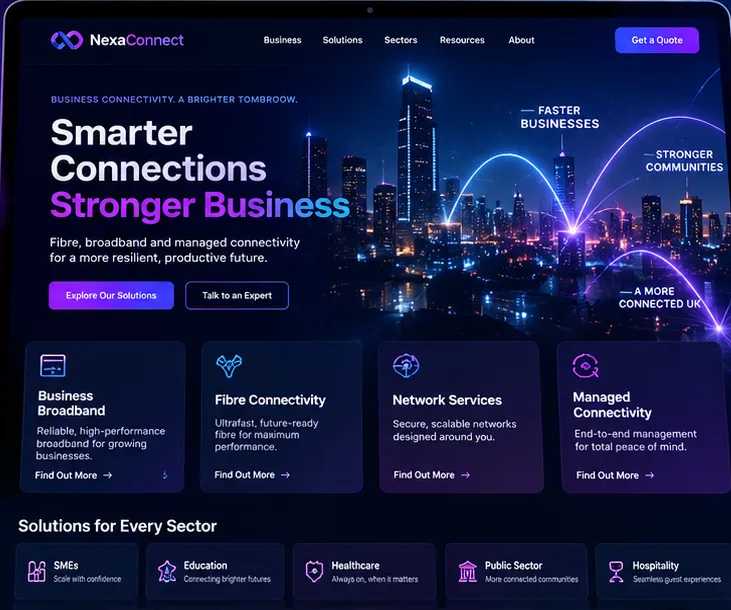
Which connection or managed service fits our sites, and what happens after we enquire?
See the decisions ↗Workplace interiors
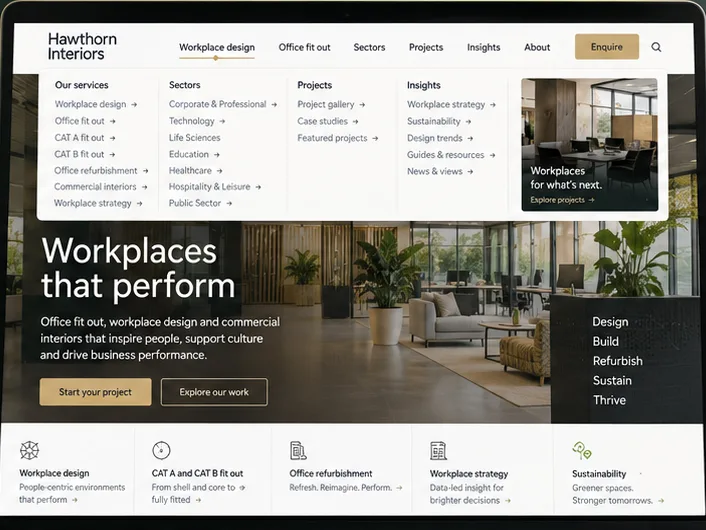
Can a client see whether a workplace team can design, fit out or refurbish the space they have in mind?
See the decisions ↗Current publisher material informs the questions we take into sector research.
Start with the decision your customer needs to make or the task your team needs to complete. We will scope the work around that.
Sector question: Where do fees, risk controls and integration responsibilities sit?
Our team keeps an eye on changing markets, buyer behaviour, search habits and competing suppliers across 77 sectors. We bring that work together in our in-house sector research database, alongside current studies and the research context in our 2011–2026 reference archive.
Researchers use that shared context to shape the questions, copy, design and tests for your business. Interviews, focus groups, usability sessions and appropriate A/B tests add evidence specific to your buyers. Findings stay connected to the sector, buying role and task, so the whole website works towards the same purpose.
We build privately and take you through three review checks. Request your refund before final approval or authorised public deployment, whichever happens first, and we return 100% of covered website fees, including VAT. No questions asked.
Your peace of mind comes first. We listen to your feedback, refine the details and walk you through your website before you approve it.
We apply the ISO 9001 quality management method and the ISO/IEC 27001 information security method across research, design, development, release and ongoing improvement. Each connects the work to named owners, checks and reviewable records.
We define the buyer task and acceptance criteria, record research and design decisions, review changes, test the agreed journeys and approve the release against its requirements.
We map information flows, assess risks, choose relevant controls and review access, suppliers and changes. Backup and response checks inform the next security review.