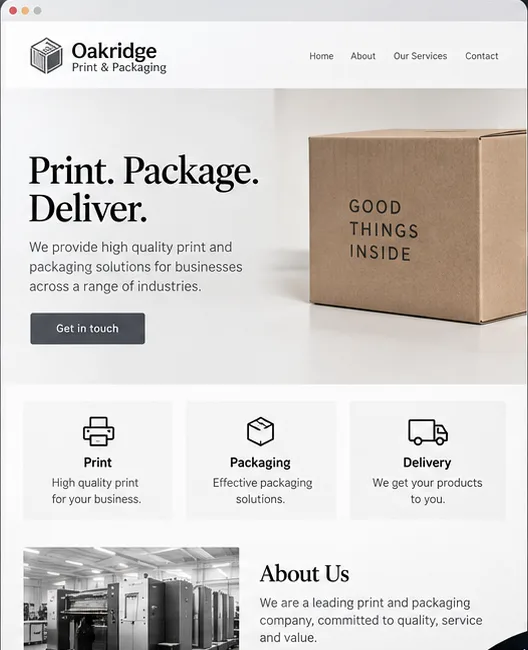
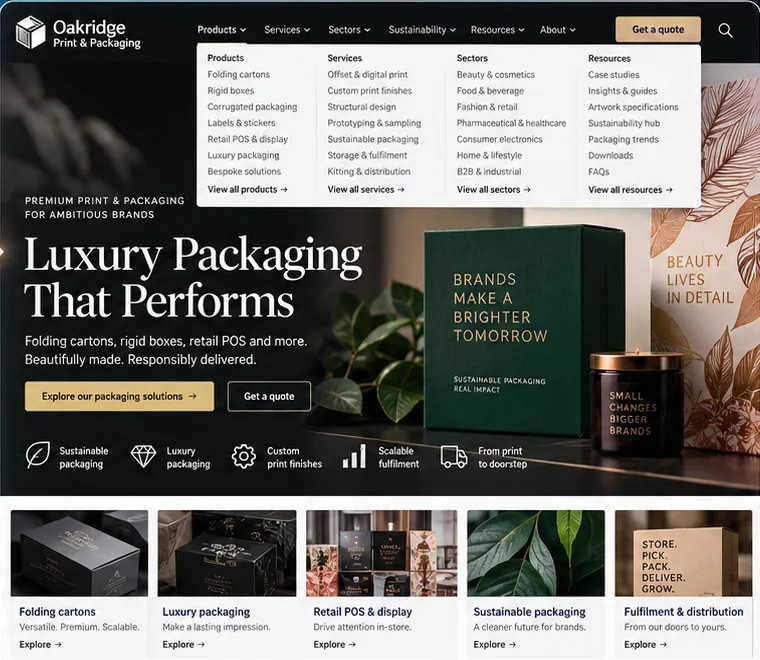
What needs answering?
Can a visitor understand the craft, scope and next step without decoding an artistic statement?
 Research BuiltRESEARCH · DESIGN · SOFTWARE
Early discovery can be unbranded. Client readouts omit participant names.
Architecture, wayfinding and print directions show how material details can explain the work itself.
Content, interaction and visual direction for a complex decision. Each image has its own research-to-action trail.
Follow the R&D route from the audience question through design and evaluation.
Can a visitor understand the craft, scope and next step without decoding an artistic statement?
Identify the buying context, required specifications and how customers currently evaluate comparable work.
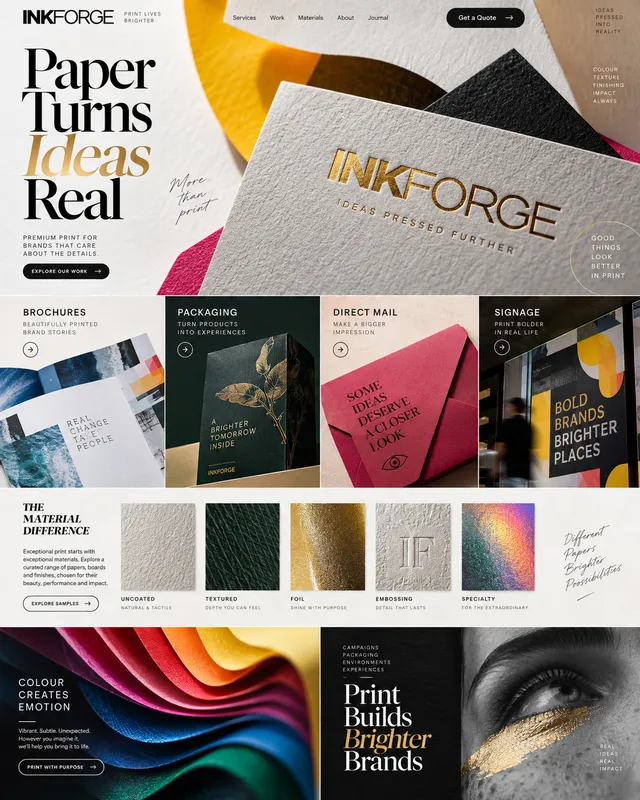
Large materials, typographic hierarchy and selective project images give each offer a distinct identity.
Test whether visitors can find process, relevant examples and a suitable brief route; verify all work and client references.
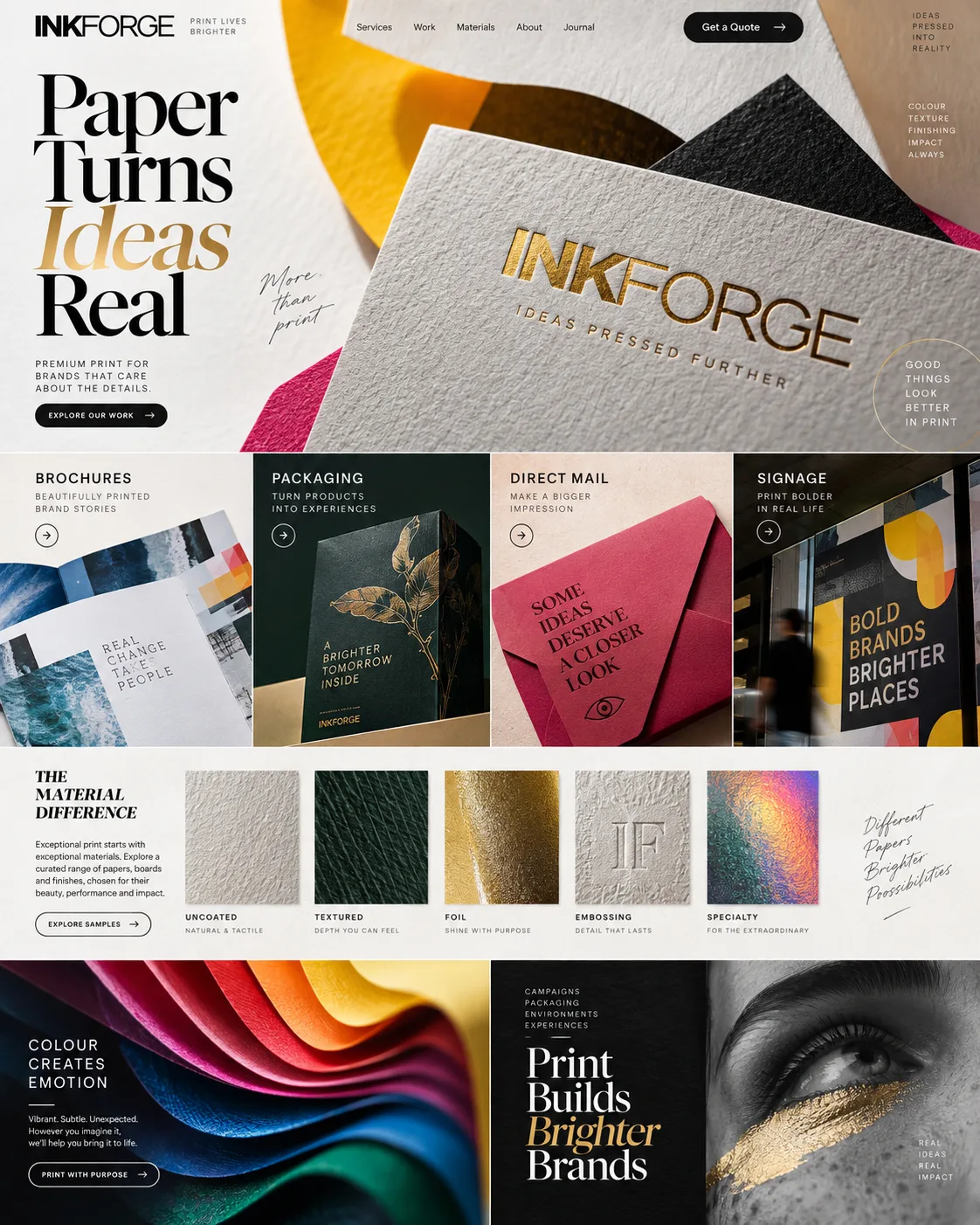
How can a printer make paper and finish feel like part of the decision?
Follow the audience question, the visual response, the build and the task that would test it.
Ask print buyers how they compare stock, finish, quantity, turnaround and file preparation.
Tactile material imagery connects to brochures, packaging, direct mail and signage.
Make materials and finishes explorable with a specification-led quote form and sample request path.
Test whether customers can compare stock, finish, quantity and turnaround before asking for a quote.
Tactile close-ups invite visitors to inspect material quality as part of the buying decision.
A buyer can move from visual interest to a print specification and relevant quote.
Track material comparison, sample requests and quotes with complete specifications.
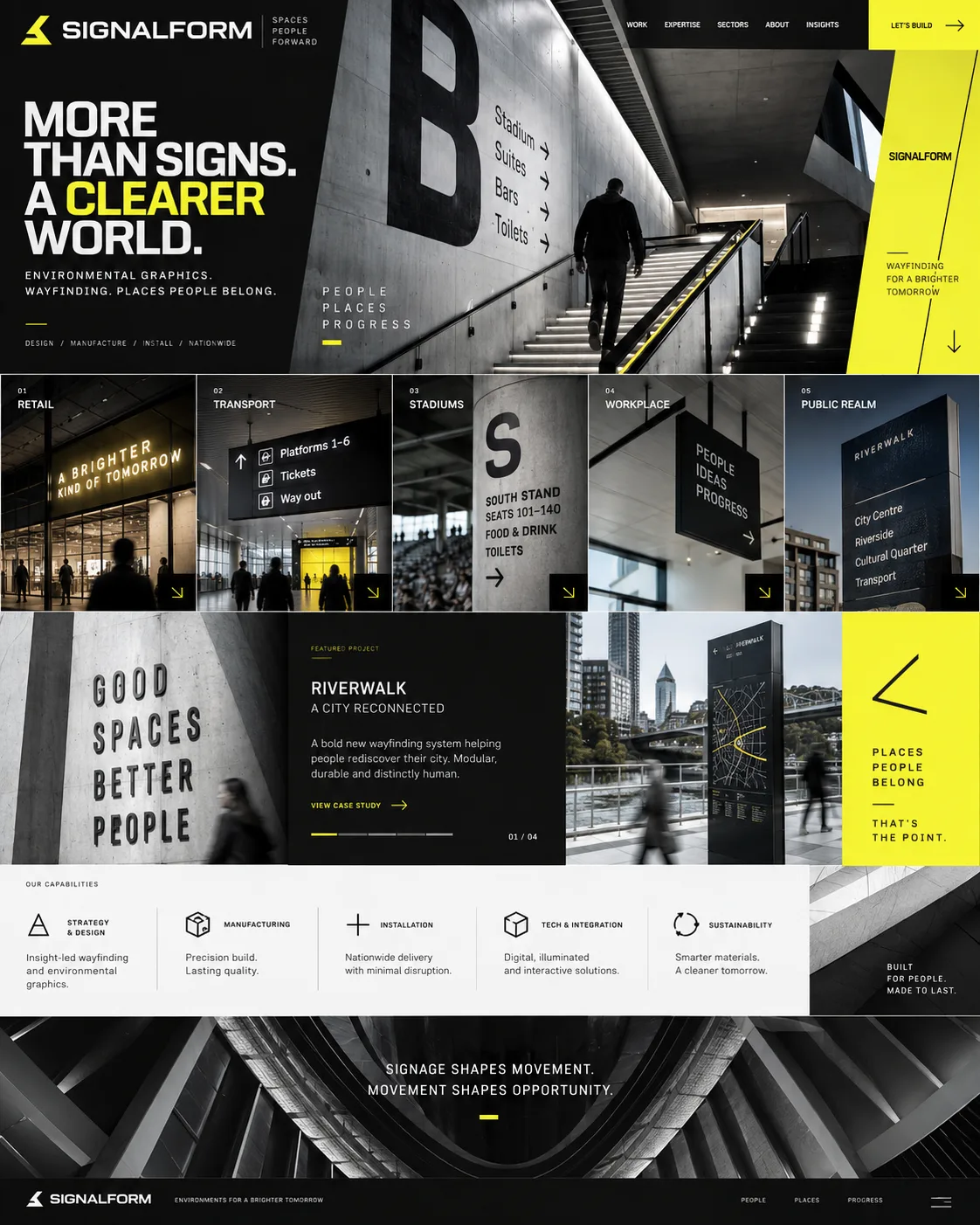
How does wayfinding work become understandable beyond attractive photographs?
Follow the audience question, the visual response, the build and the task that would test it.
Ask facilities and place teams which accessibility, durability, material and installation constraints define a wayfinding brief.
Environmental graphics are paired with sector routes, public-space context and a process strip.
Pair environmental graphics with sector examples, process stages and a constraint-aware project brief.
Ask a facilities or place team to find accessibility, materials, installation scope and project constraints.
Large-scale graphics show the work in context, making an abstract design service tangible.
A buyer can connect an appealing installation to a feasible scope and start a useful enquiry.
Test relevant-case discovery, accessibility-detail finds and briefs that state site constraints.
How can a quiet architecture identity still support project discovery?
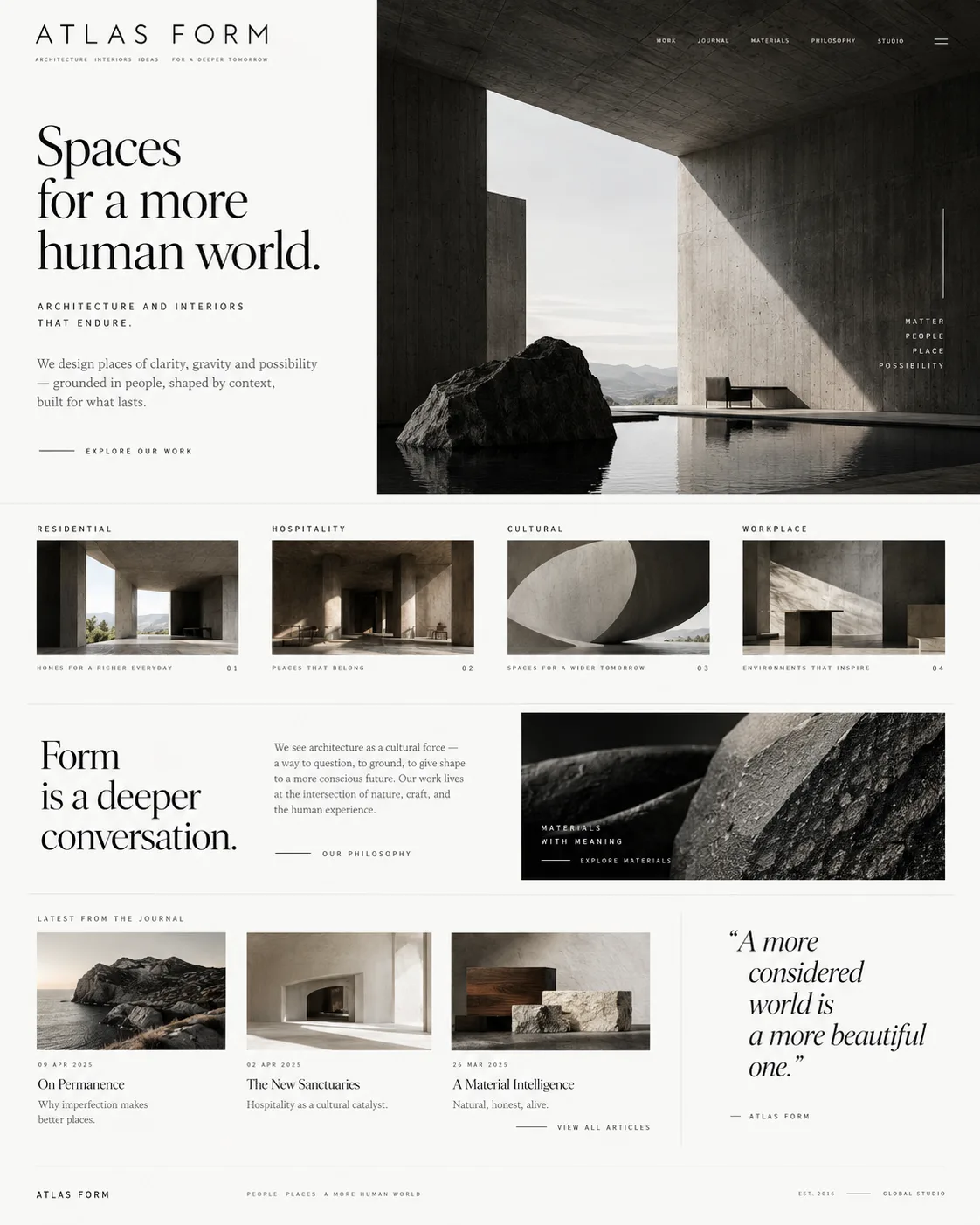
Follow the audience question, the visual response, the build and the task that would test it.
Ask prospective clients which building type, project scale and service stage they need to see before approaching an architect.
Restrained type and architectural imagery group residential, hospitality, cultural and workplace work.
Filter projects by use and scope, then pair each with service detail and a commission enquiry.
Test project filtering and the path from inspiration to a relevant commission enquiry.
Restrained typography lets architectural imagery carry the character while keeping navigation quiet and clear.
Finding comparable work helps a prospective client explain the commission they want to discuss.
Track project filtering, relevant work views and commission enquiries with a defined scope.
The visual shift follows a specific buyer question. Open each example for the method, page decision and test.
One strategy-led direction studies how an advisory offer can show expertise without burying the visitor in abstract promises.
Start with the decision your customer needs to make or the task your team needs to complete. We will scope the work around that.
Our team keeps an eye on changing markets, buyer behaviour, search habits and competing suppliers across 77 sectors. We bring that work together in our in-house sector research database, alongside current studies and the research context in our 2011–2026 reference archive.
Researchers use that shared context to shape the questions, copy, design and tests for your business. Interviews, focus groups, usability sessions and appropriate A/B tests add evidence specific to your buyers. Findings stay connected to the sector, buying role and task, so the whole website works towards the same purpose.
We build privately and take you through three review checks. Request your refund before final approval or authorised public deployment, whichever happens first, and we return 100% of covered website fees, including VAT. No questions asked.
Your peace of mind comes first. We listen to your feedback, refine the details and walk you through your website before you approve it.
We apply the ISO 9001 quality management method and the ISO/IEC 27001 information security method across research, design, development, release and ongoing improvement. Each connects the work to named owners, checks and reviewable records.
We define the buyer task and acceptance criteria, record research and design decisions, review changes, test the agreed journeys and approve the release against its requirements.
We map information flows, assess risks, choose relevant controls and review access, suppliers and changes. Backup and response checks inform the next security review.