What needs answering?
What would make an organisation trust the thinking before starting a conversation?
 Research BuiltRESEARCH · DESIGN · SOFTWARE
Early discovery can be unbranded. Client readouts omit participant names.
One strategy-led direction studies how an advisory offer can show expertise without burying the visitor in abstract promises.
Content, interaction and visual direction for a complex decision. Each image has its own research-to-action trail.
Follow the R&D route from the audience question through design and evaluation.
What would make an organisation trust the thinking before starting a conversation?
Map the decision-makers, the situations that trigger a search for advice and the evidence each person expects.
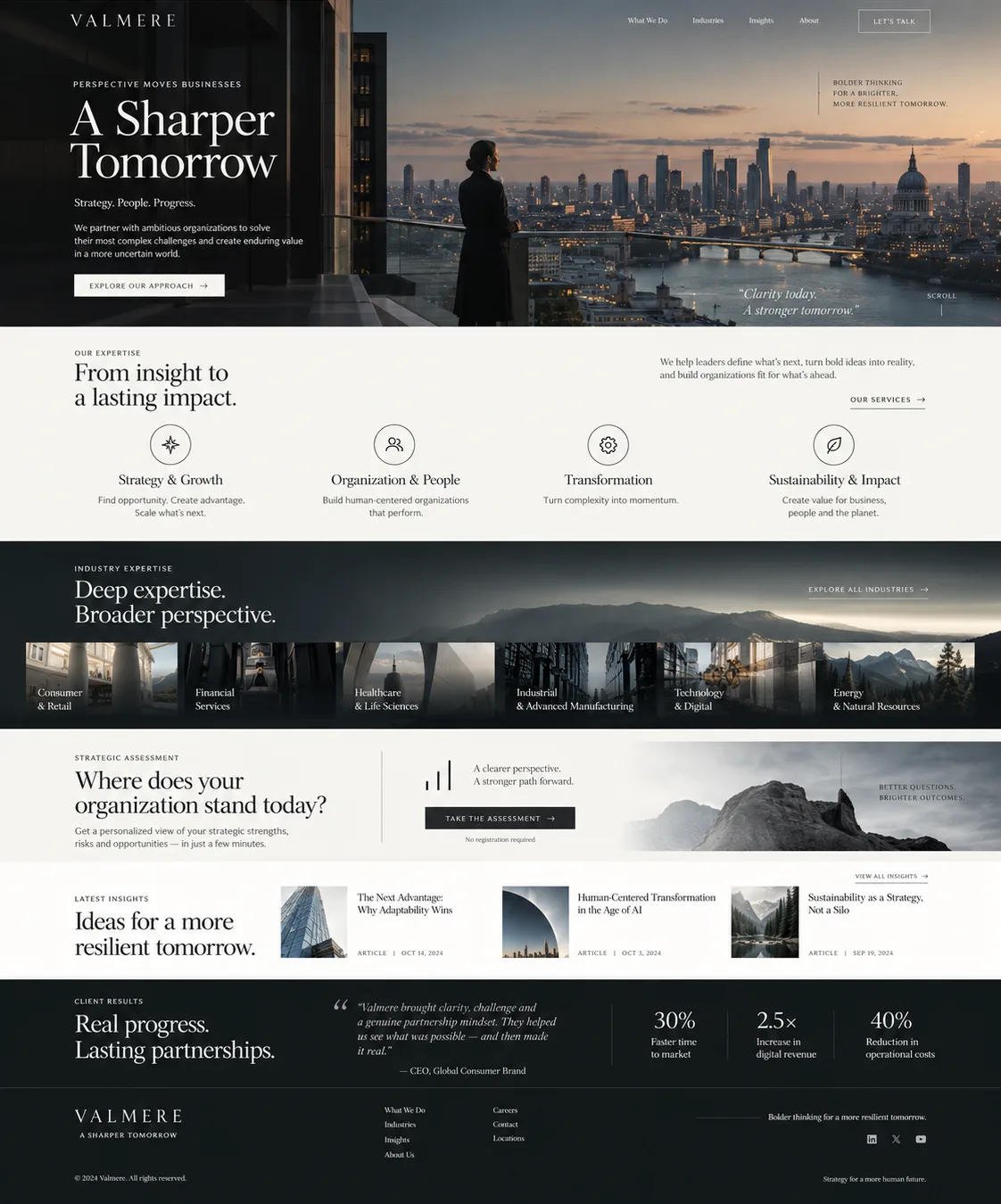
The Valmere visual moves from a direct point of view into services, people, ideas and a conversation route.
Test whether visitors understand the offer and can identify a relevant person or next step. Check displayed figures and quotations with the responsible team.
Can a strong advisory headline lead to a concrete reason to engage?
Follow the audience question, the visual response, the build and the task that would test it.
Interview decision-makers about the trigger for seeking advice, what expertise they trust and which proof matters.
A restrained skyline opening leads into strategy, people, perspectives and an invitation to talk.
Move from a clear point of view to specific services, people, relevant ideas and a conversation route.
Ask prospective clients to explain the offer back in their own words; verify all apparent results and references.
A restrained skyline and direct headline give the firm a distinct, confident first impression.
A visitor who understands the offer and finds a relevant adviser has a concrete reason to start a conversation.
Test offer comprehension, adviser discovery and conversations that name a relevant business problem.
The visual shift follows a specific buyer question. Open each example for the method, page decision and test.
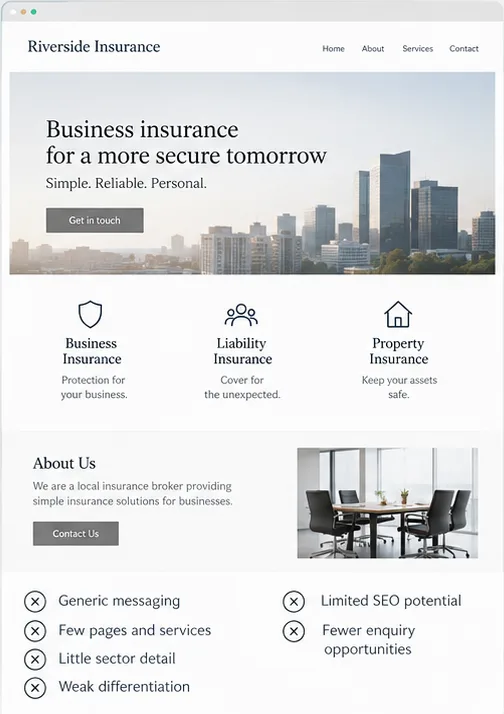
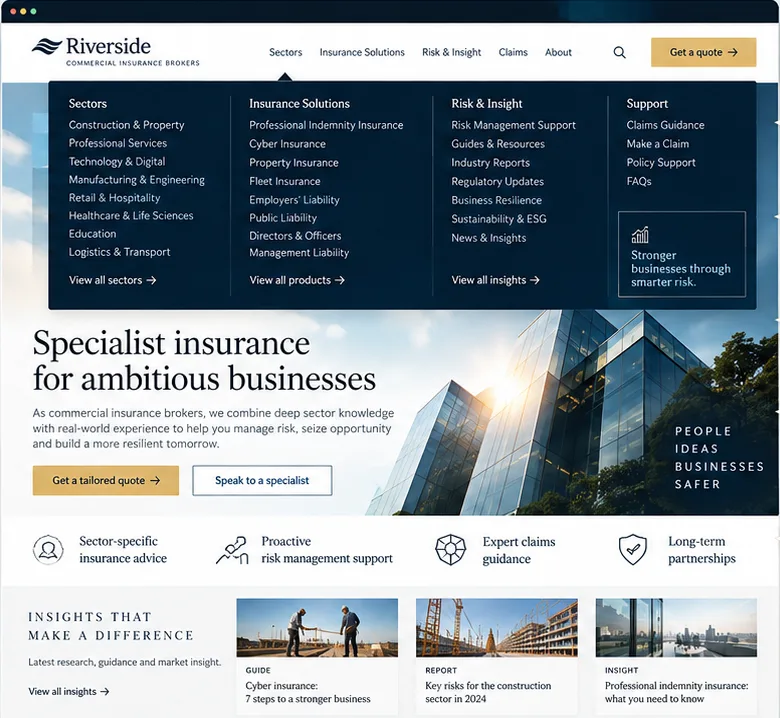
Three direction boards show a broad range of visual territories and brand approaches.
Start with the decision your customer needs to make or the task your team needs to complete. We will scope the work around that.
Our team keeps an eye on changing markets, buyer behaviour, search habits and competing suppliers across 77 sectors. We bring that work together in our in-house sector research database, alongside current studies and the research context in our 2011–2026 reference archive.
Researchers use that shared context to shape the questions, copy, design and tests for your business. Interviews, focus groups, usability sessions and appropriate A/B tests add evidence specific to your buyers. Findings stay connected to the sector, buying role and task, so the whole website works towards the same purpose.
We build privately and take you through three review checks. Request your refund before final approval or authorised public deployment, whichever happens first, and we return 100% of covered website fees, including VAT. No questions asked.
Your peace of mind comes first. We listen to your feedback, refine the details and walk you through your website before you approve it.
We apply the ISO 9001 quality management method and the ISO/IEC 27001 information security method across research, design, development, release and ongoing improvement. Each connects the work to named owners, checks and reviewable records.
We define the buyer task and acceptance criteria, record research and design decisions, review changes, test the agreed journeys and approve the release against its requirements.
We map information flows, assess risks, choose relevant controls and review access, suppliers and changes. Backup and response checks inform the next security review.