What needs answering?
What would a technical buyer need to know before trusting a supplier with a specification?
 Research BuiltRESEARCH · DESIGN · SOFTWARE
Early discovery can be unbranded. Client readouts omit participant names.
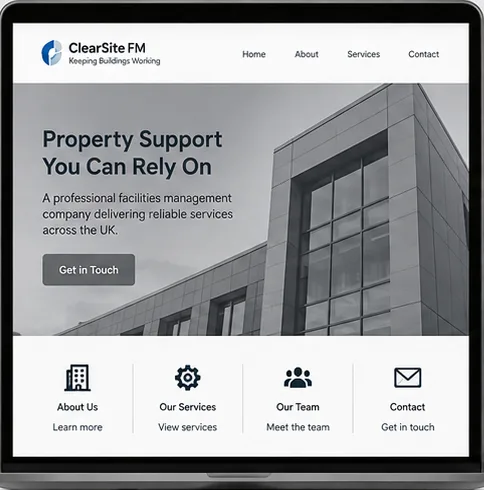
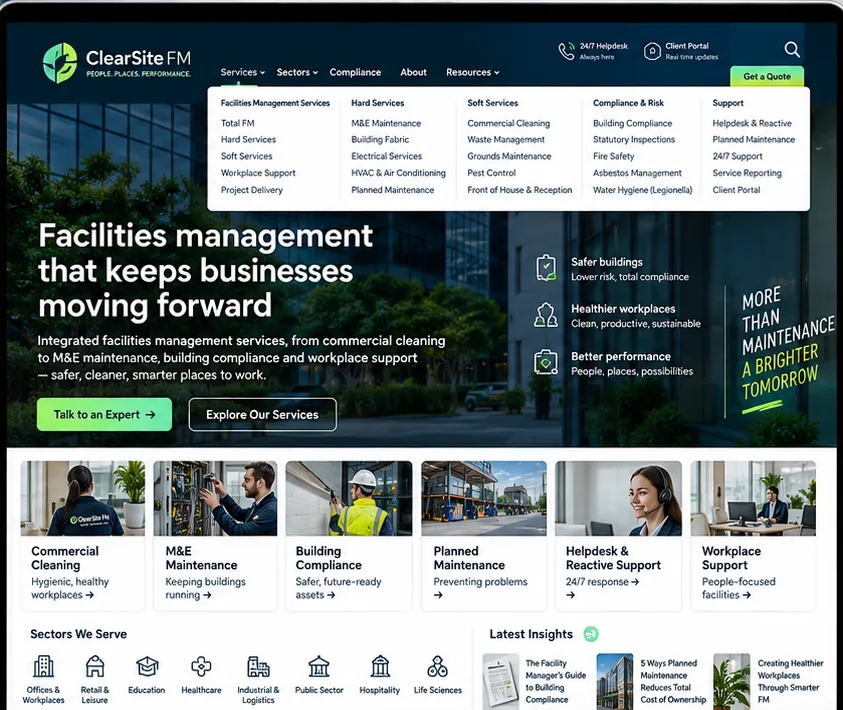
Built-environment, logistics and precision-manufacturing directions explore how practical proof can sit beside ambitious positioning.
Content, interaction and visual direction for a complex decision. Each image has its own research-to-action trail.
Follow the R&D route from the audience question through design and evaluation.
What would a technical buyer need to know before trusting a supplier with a specification?
List the buyer's qualification criteria, drawings or service data needed, and the questions that currently require a call.
The visuals organise capabilities, sectors, process detail and task entry points such as a part configuration or shipment lookup.
Run a specification-finding task with technical buyers. A tracker or configurator must be connected to real operational data before it can be described as working.
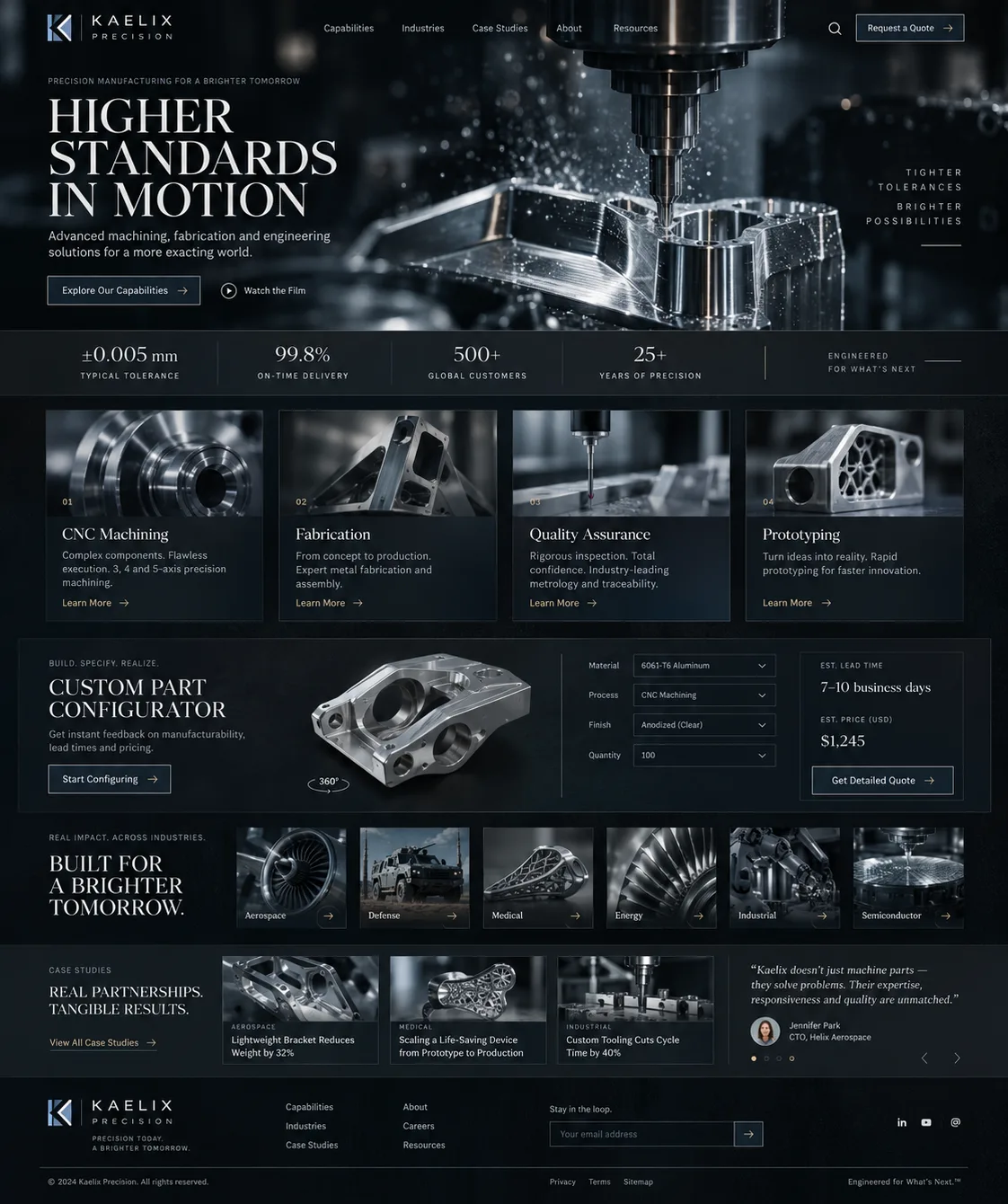
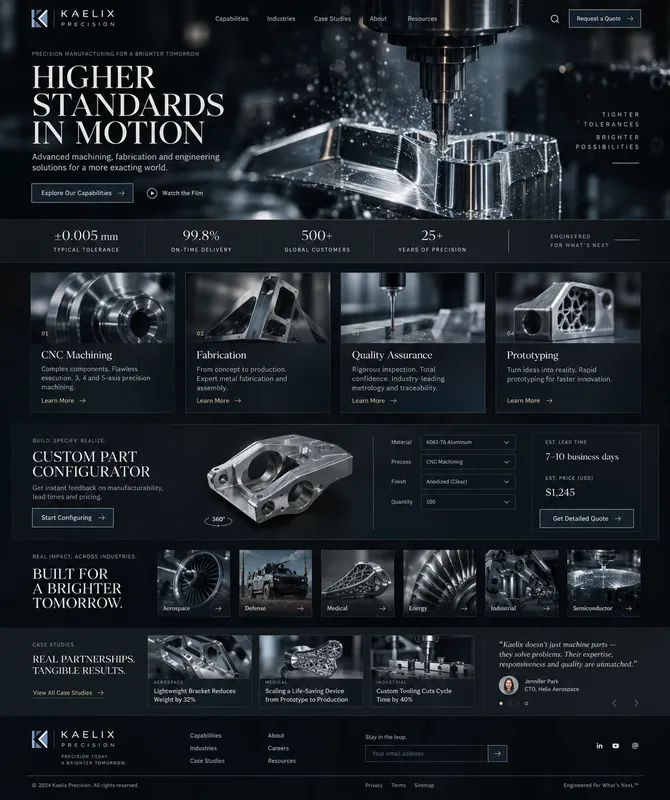
Can a manufacturing site help an engineer qualify capability quickly?
Follow the audience question, the visual response, the build and the task that would test it.
Ask engineers which tolerances, materials, processes and file requirements determine supplier fit.
Machining imagery leads to capability groups, tolerances and a proposed custom-part configurator.
Connect capability and approved specifications to a quote path that captures part, quantity and drawing requirements.
Check units, tolerances, materials and quote inputs with engineers; replace mock figures with approved specifications.
Precision-machining imagery signals the category quickly while capability groups invite technical inspection.
An engineer can qualify the supplier and submit a usable part request without an exploratory call.
Time specification finds and track quote requests with complete technical inputs.
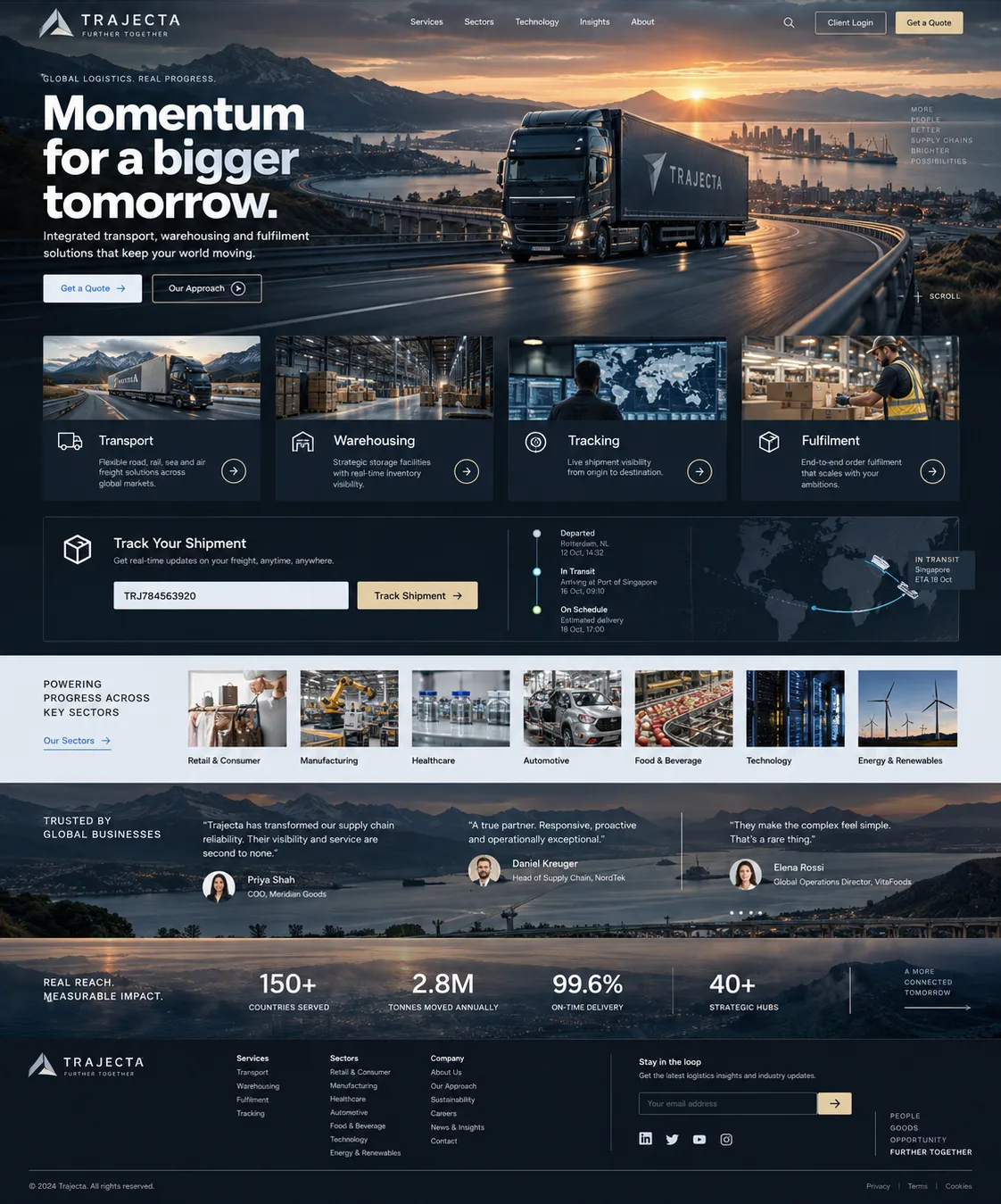
How should logistics breadth lead into a useful customer task?
Follow the audience question, the visual response, the build and the task that would test it.
Map the separate jobs of a shipper seeking a service and a customer checking an existing shipment.
Transport, warehousing and fulfilment routes connect to a prominent shipment-tracking direction.
Separate service selection from tracking, with any live tracker backed by carrier data and appropriate access controls.
Test route selection and tracking terminology; a live tracker would need carrier integrations and data-security review.
Transport imagery conveys reach; prominent task routes prevent the visual from obscuring the job at hand.
A shipper can reach a relevant quote, while an existing customer can resolve a tracking task.
Track service-route accuracy, quote quality, tracking success and support contacts after failure.
How can a construction group connect sectors, delivery and ongoing service?
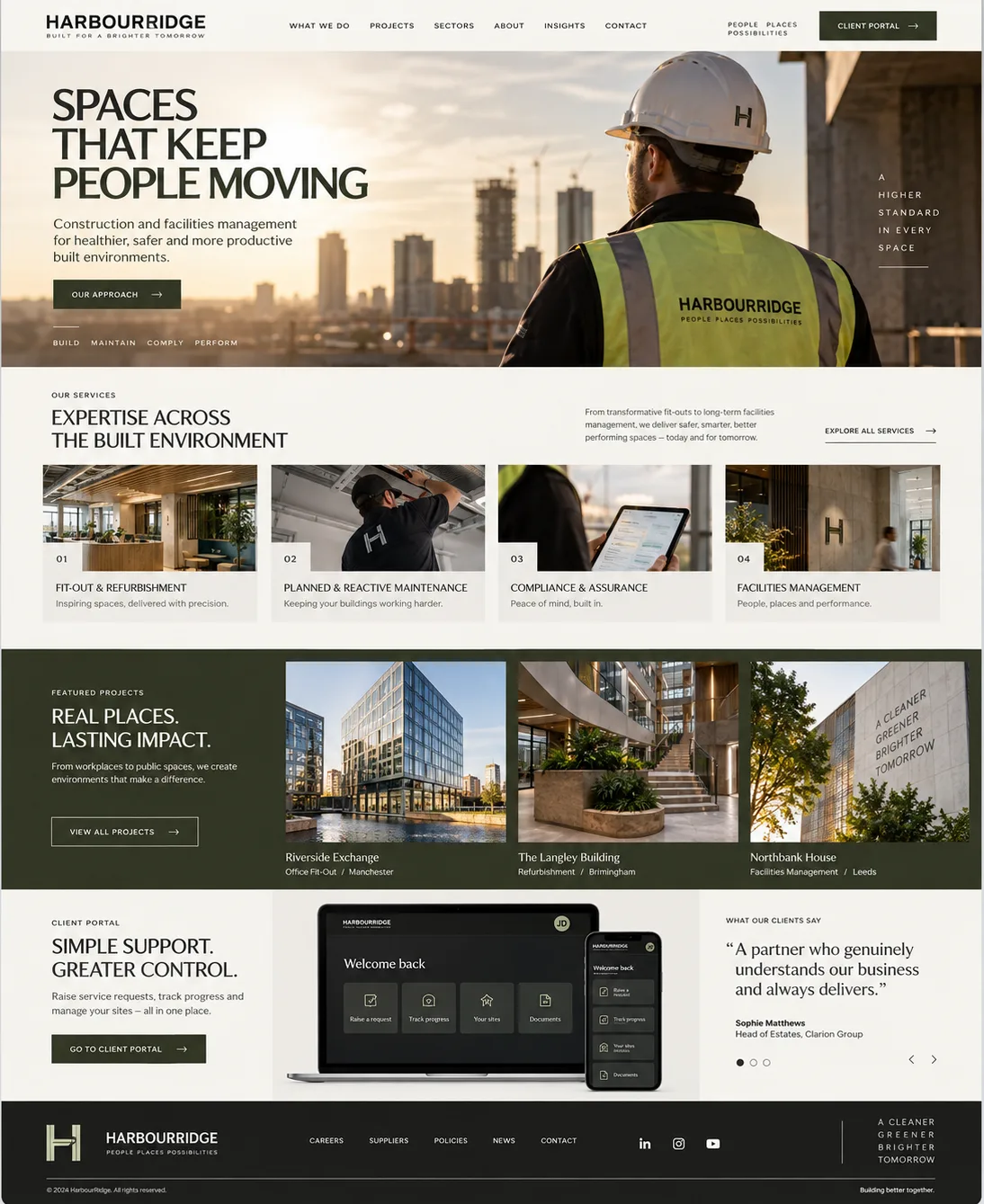
Follow the audience question, the visual response, the build and the task that would test it.
Ask procurement and existing clients which project proof, service responsibilities and support routes they need.
A grounded site image leads into built-environment services, project proof and a portal-style support preview.
Connect sectors and approved projects to a new-business enquiry while keeping client support separate.
Confirm real project permissions and service responsibilities, then test whether clients can find the correct support route.
Grounded construction imagery signals real delivery and opens a route to inspect project evidence.
Prospects can submit a project-specific enquiry; current clients can find the correct support path.
Test project-proof discovery, enquiry relevance and client support-route success.
The visual shift follows a specific buyer question. Open each example for the method, page decision and test.
Healthcare and learning directions test how reassuring design can support a serious choice.
Start with the decision your customer needs to make or the task your team needs to complete. We will scope the work around that.
Our team keeps an eye on changing markets, buyer behaviour, search habits and competing suppliers across 77 sectors. We bring that work together in our in-house sector research database, alongside current studies and the research context in our 2011–2026 reference archive.
Researchers use that shared context to shape the questions, copy, design and tests for your business. Interviews, focus groups, usability sessions and appropriate A/B tests add evidence specific to your buyers. Findings stay connected to the sector, buying role and task, so the whole website works towards the same purpose.
We build privately and take you through three review checks. Request your refund before final approval or authorised public deployment, whichever happens first, and we return 100% of covered website fees, including VAT. No questions asked.
Your peace of mind comes first. We listen to your feedback, refine the details and walk you through your website before you approve it.
We apply the ISO 9001 quality management method and the ISO/IEC 27001 information security method across research, design, development, release and ongoing improvement. Each connects the work to named owners, checks and reviewable records.
We define the buyer task and acceptance criteria, record research and design decisions, review changes, test the agreed journeys and approve the release against its requirements.
We map information flows, assess risks, choose relevant controls and review access, suppliers and changes. Backup and response checks inform the next security review.