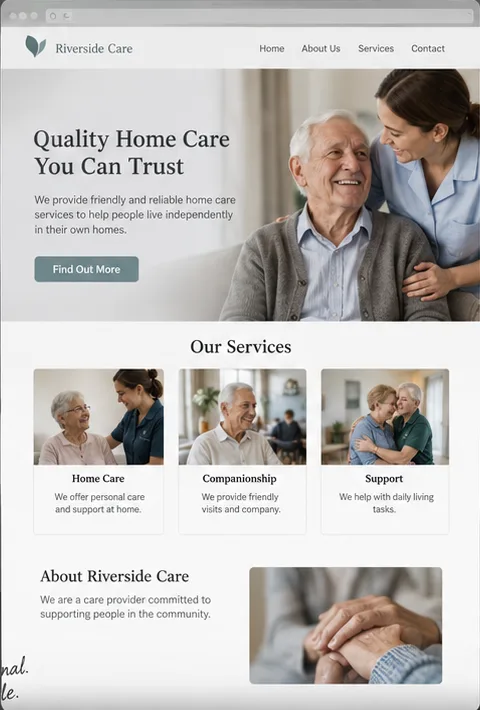
What needs answering?
What information would help someone feel informed enough to choose a course or ask for care?
 Research BuiltRESEARCH · DESIGN · SOFTWARE
Early discovery can be unbranded. Client readouts omit participant names.
Healthcare and learning directions test how reassuring design can support a serious choice.
Content, interaction and visual direction for a complex decision. Each image has its own research-to-action trail.
Follow the R&D route from the audience question through design and evaluation.
What information would help someone feel informed enough to choose a course or ask for care?
Interview the relevant user groups with care, map eligibility and accessibility needs, and have qualified owners review regulated or health-related copy.
The designs use human photography and short pathways into services, courses, teams and next steps.
Test plain-language comprehension, keyboard use and the form journey. Check figures, testimonials and professional claims with the responsible team.
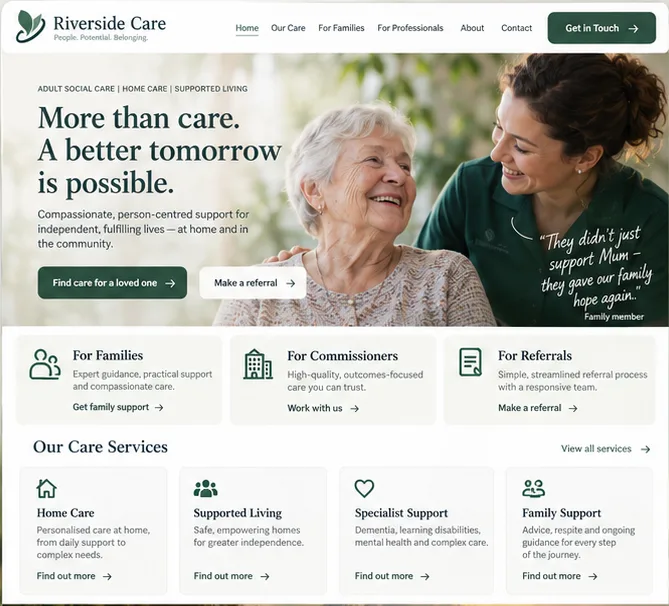
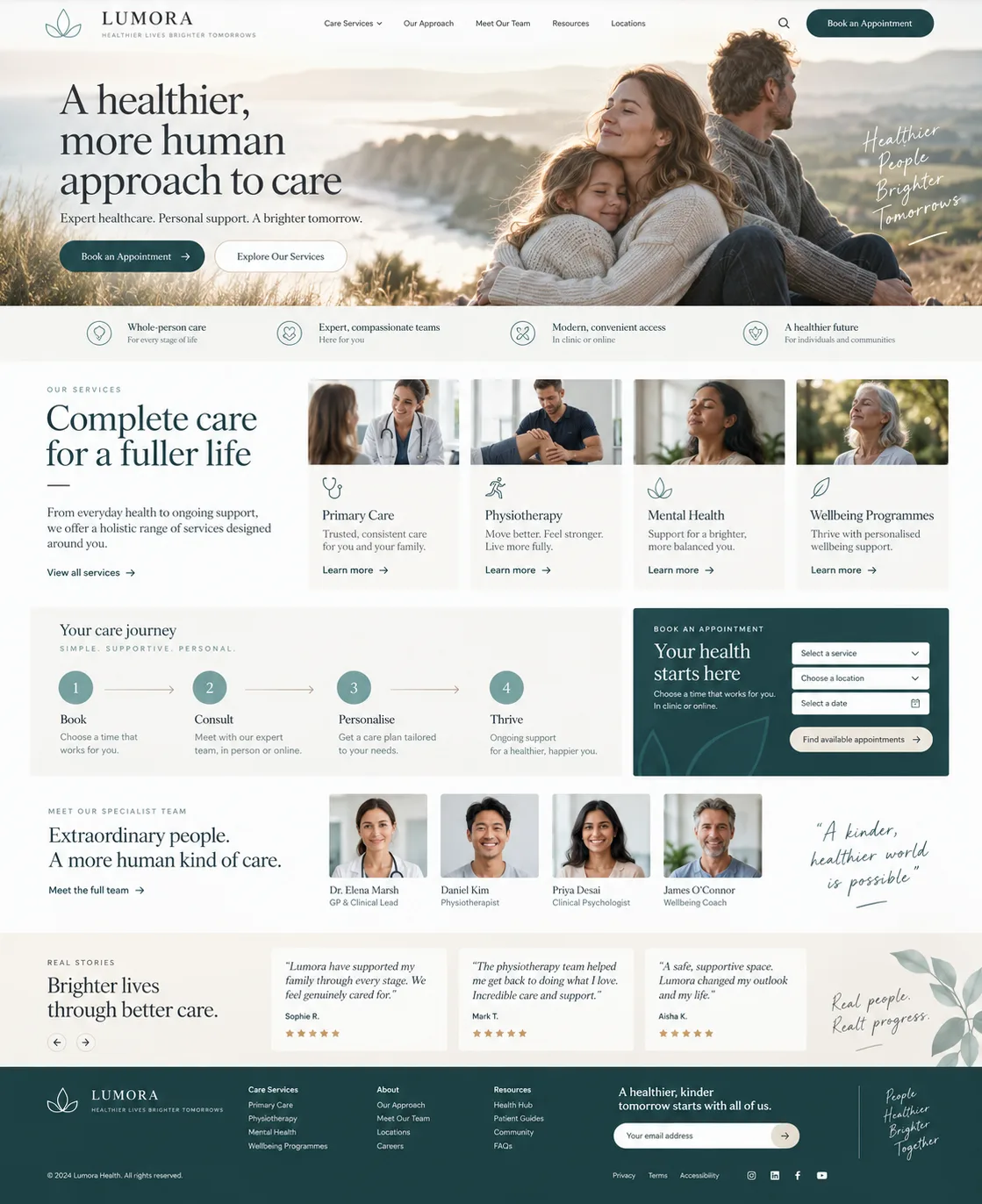
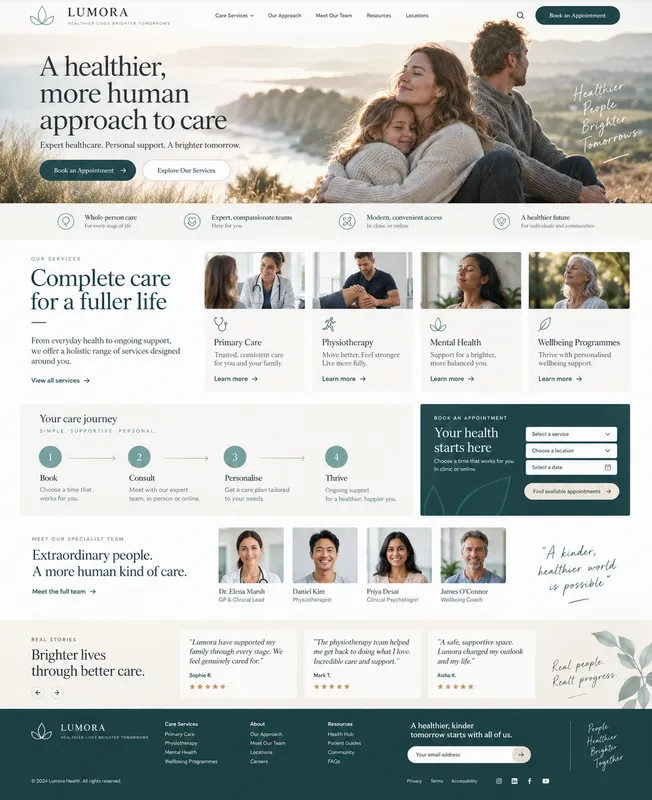
How can a care website make the first enquiry feel manageable?
Follow the audience question, the visual response, the build and the task that would test it.
Interview potential care users about service fit, reassurance, privacy and the details needed before requesting help.
A family image introduces care categories, a simple journey and a prominent appointment prompt.
Use accessible service choices, reviewed language and a clear consent-aware appointment or enquiry path.
Test service matching and consent with potential users; review every clinical statement with the responsible professional.
Human photography offers warmth without forcing a complex or vulnerable visitor to decode the page.
Clarity about the available care route can support a safe, appropriate first enquiry.
Check service matching, plain-language comprehension, form completion and wrong-route contacts.
How can a prospective learner see both possibility and practical fit?
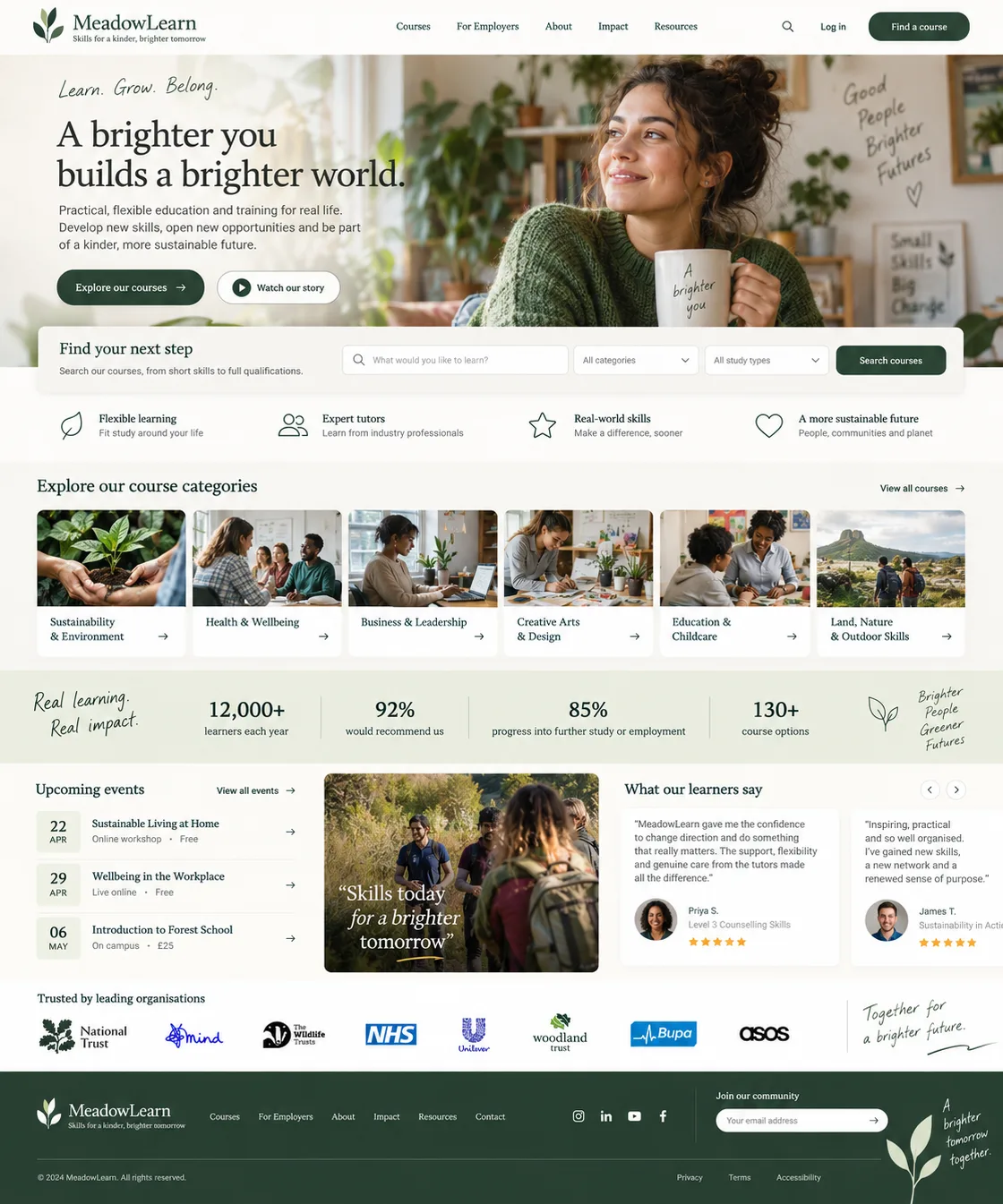
Follow the audience question, the visual response, the build and the task that would test it.
Ask learners how they compare courses by goal, schedule, support, cost and progression.
A welcoming hero moves into course categories, search, events and learner voices.
Add goal-led course search, reviewed outcome information, event details and a clear application path.
Test course finding by goal and schedule; verify outcome statistics, learner quotes and organisation logos.
A welcoming scene makes the opportunity feel approachable before practical course information appears.
A learner who can confirm fit may move from inspiration to an application or event booking.
Test course matching, schedule finds, application starts and completed relevant applications.
The visual shift follows a specific buyer question. Open each example for the method, page decision and test.
Wedding, retreat and restaurant directions explore the moment between inspiration and making a reservation.
Start with the decision your customer needs to make or the task your team needs to complete. We will scope the work around that.
Our team keeps an eye on changing markets, buyer behaviour, search habits and competing suppliers across 77 sectors. We bring that work together in our in-house sector research database, alongside current studies and the research context in our 2011–2026 reference archive.
Researchers use that shared context to shape the questions, copy, design and tests for your business. Interviews, focus groups, usability sessions and appropriate A/B tests add evidence specific to your buyers. Findings stay connected to the sector, buying role and task, so the whole website works towards the same purpose.
We build privately and take you through three review checks. Request your refund before final approval or authorised public deployment, whichever happens first, and we return 100% of covered website fees, including VAT. No questions asked.
Your peace of mind comes first. We listen to your feedback, refine the details and walk you through your website before you approve it.
We apply the ISO 9001 quality management method and the ISO/IEC 27001 information security method across research, design, development, release and ongoing improvement. Each connects the work to named owners, checks and reviewable records.
We define the buyer task and acceptance criteria, record research and design decisions, review changes, test the agreed journeys and approve the release against its requirements.
We map information flows, assess risks, choose relevant controls and review access, suppliers and changes. Backup and response checks inform the next security review.