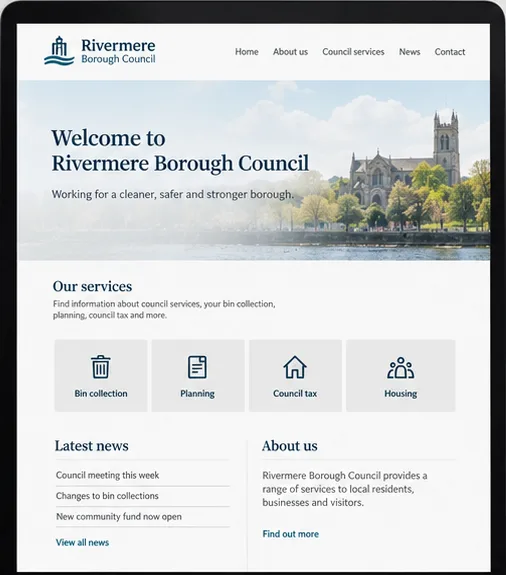
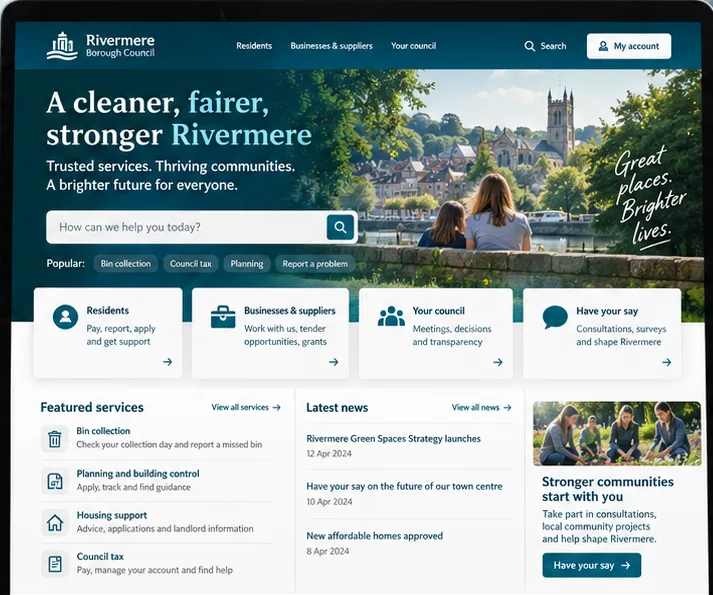
What needs answering?
How can a highly expressive identity help someone find the event, product or experience they came for?
 Research BuiltRESEARCH · DESIGN · SOFTWARE
Early discovery can be unbranded. Client readouts omit participant names.
Festival, music, streetwear and creative-space directions show visual range without treating expression as a substitute for usability.
Content, interaction and visual direction for a complex decision. Each image has its own research-to-action trail.
Follow the R&D route from the audience question through design and evaluation.
How can a highly expressive identity help someone find the event, product or experience they came for?
Identify the audience's first task, their device and the information needed before a booking or purchase decision.
The visuals use strong type, high-contrast colour and photography to set a mood, then introduce programme, product and venue routes.
Test event discovery, accessibility, mobile reading and booking handoff. Any attendance figures or endorsements in these directions are placeholders until evidenced.
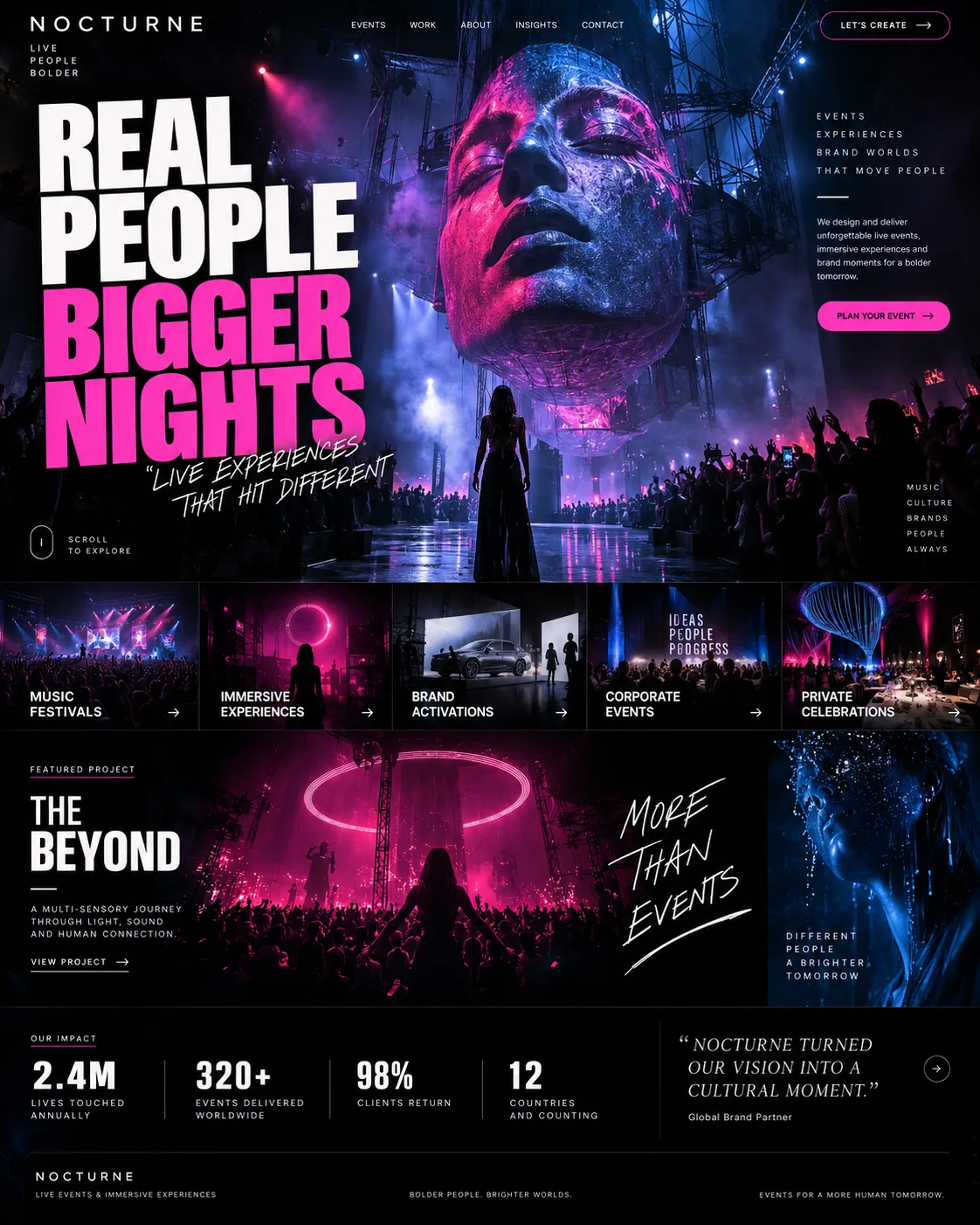
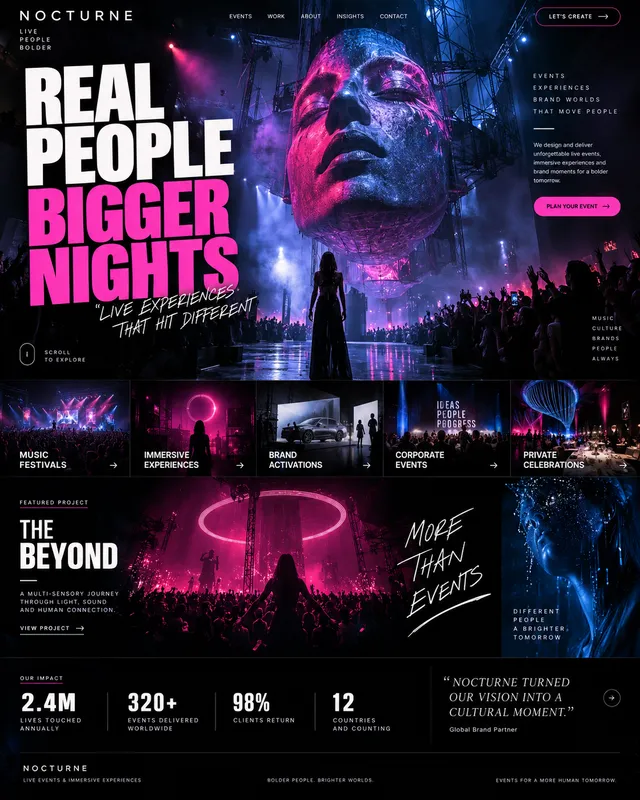
Can an event page sell the atmosphere and still make dates easy to find?
Follow the audience question, the visual response, the build and the task that would test it.
Ask festival-goers how they choose a night and which date, location and ticket details they look for first.
Neon colour and a dramatic crowd scene lead into event types and a clear ticket action.
Move from the atmospheric hero to a scannable event calendar with clear ticket availability and handoff.
Time a visitor finding a suitable date and ticket; verify capacity and attendance claims before publication.
Neon colour and crowd imagery deliver the promised mood before the visitor scans the event options.
A suitable date and simple ticket route turn excitement into a booking decision.
Time date discovery and track ticket handoff, booking completion and wrong-event returns.
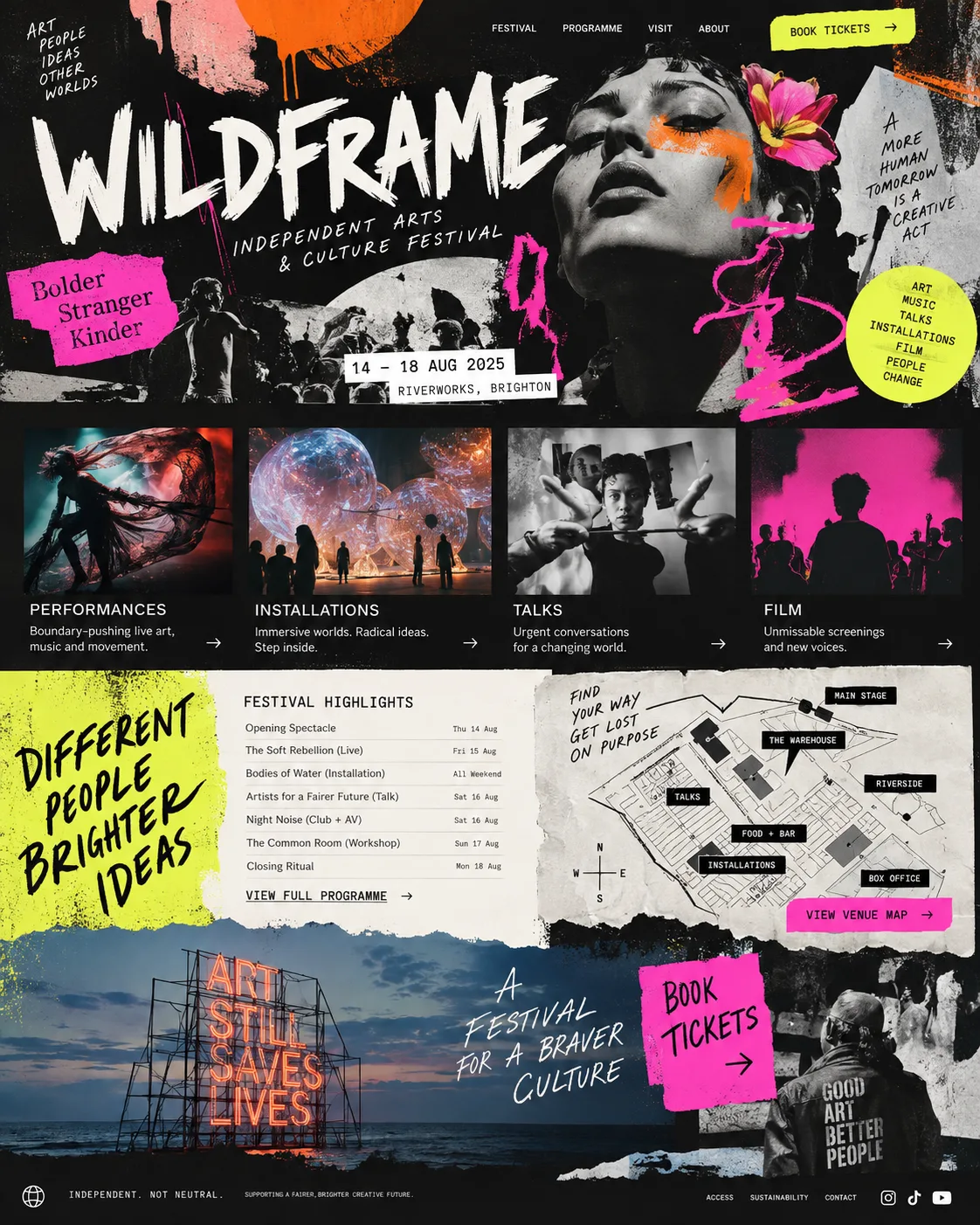
What gives an independent arts festival its own voice?
Follow the audience question, the visual response, the build and the task that would test it.
Watch arts audiences search a programme by interest, time, venue and accessibility needs.
Collage, handwritten accents and a dense programme create a recognisable visual character.
Keep the expressive collage but give events consistent metadata, filters and venue directions.
Test programme scanning, venue directions and contrast at small screen sizes with actual festival information.
Collage and handwritten accents create a recognisable festival voice that invites browsing.
Reliable programme details help a visitor choose an event and continue to its booking route.
Test programme scan speed, venue finds, mobile readability and booking starts.
How might streetwear storytelling connect to a product decision?
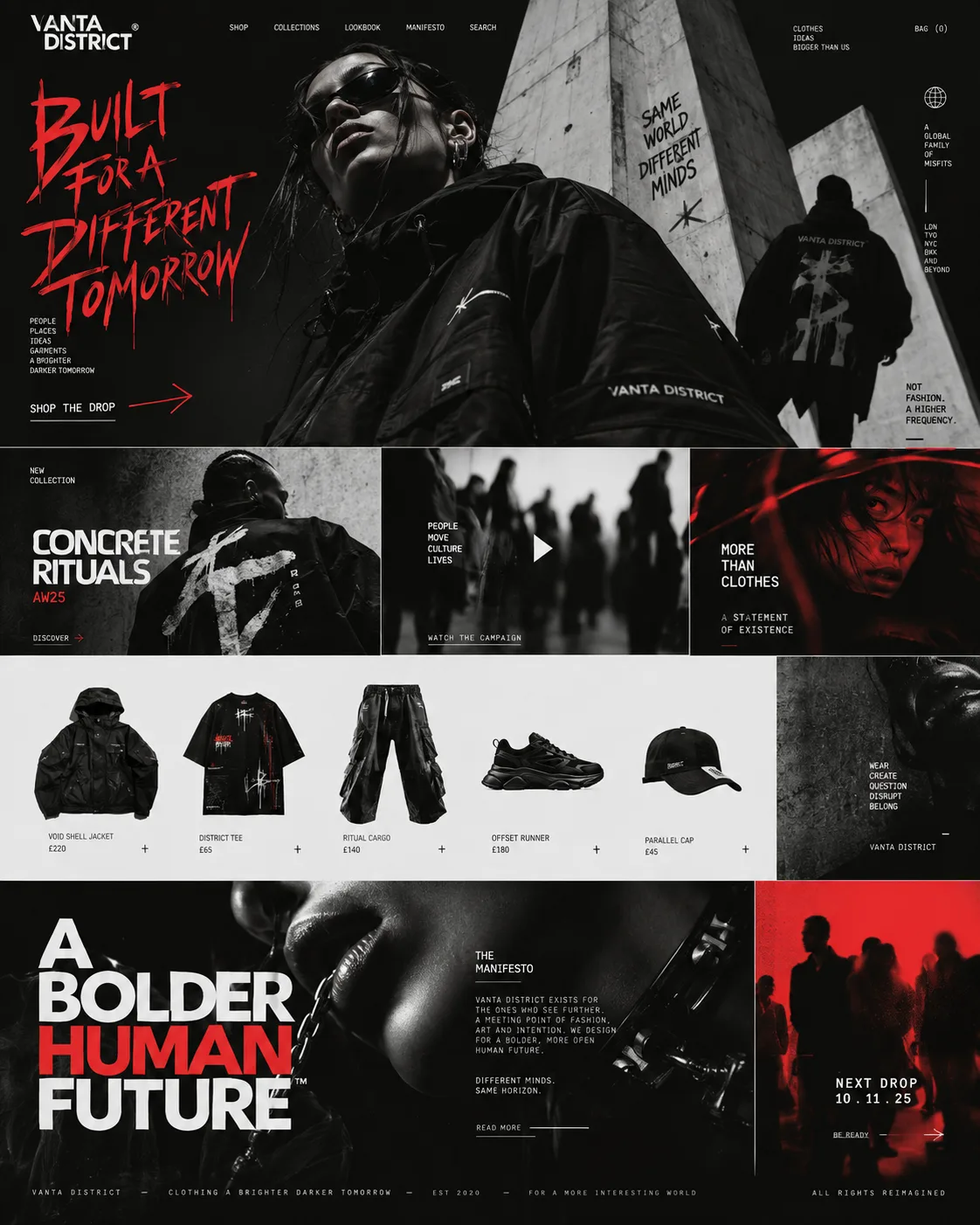
Follow the audience question, the visual response, the build and the task that would test it.
Observe shoppers choosing a product and list the sizing, stock, delivery and return questions that delay purchase.
Editorial portraits and assertive copy lead into a simple product strip and collection narrative.
Link editorial stories to clear product cards, accurate size guidance, availability and a dependable basket flow.
Check sizing, availability, product photography, basket flow and whether the tone resonates with the intended audience.
Editorial portraits and assertive type establish a distinct point of view before the product strip appears.
Product confidence can turn brand interest into a suitable item selection and basket action.
Track size-guide use, product selection, basket additions, checkout completion and returns.
How can a creative-space offer show the breadth of its work?
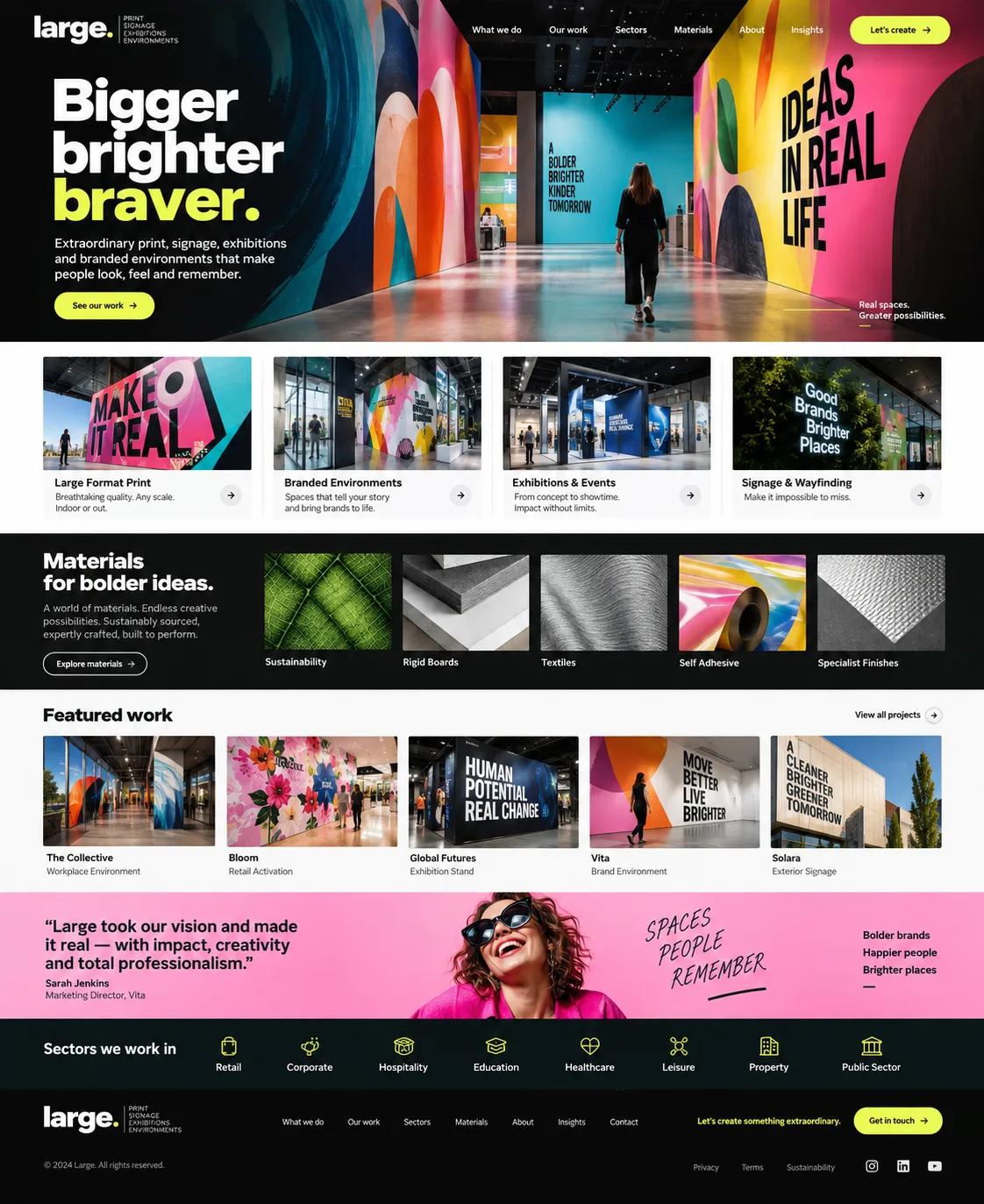
Follow the audience question, the visual response, the build and the task that would test it.
Ask creative buyers what examples, materials and production constraints they need to judge fit.
Colourful environmental graphics become the entry point to formats, materials and featured work.
Use the graphic identity as an entry, then make formats, materials and comparable work searchable.
Ask a buyer to find a comparable project, material constraint and enquiry route; verify any testimonial before use.
Colourful environmental graphics create a memorable signal of the studio's visual range.
A relevant example and visible production scope support a brief tied to the buyer's actual project.
Test comparable-project discovery, constraint finds and briefs with clear scope.
The visual shift follows a specific buyer question. Open each example for the method, page decision and test.
Built-environment, logistics and precision-manufacturing directions explore how practical proof can sit beside ambitious positioning.
Start with the decision your customer needs to make or the task your team needs to complete. We will scope the work around that.
Our team keeps an eye on changing markets, buyer behaviour, search habits and competing suppliers across 77 sectors. We bring that work together in our in-house sector research database, alongside current studies and the research context in our 2011–2026 reference archive.
Researchers use that shared context to shape the questions, copy, design and tests for your business. Interviews, focus groups, usability sessions and appropriate A/B tests add evidence specific to your buyers. Findings stay connected to the sector, buying role and task, so the whole website works towards the same purpose.
We build privately and take you through three review checks. Request your refund before final approval or authorised public deployment, whichever happens first, and we return 100% of covered website fees, including VAT. No questions asked.
Your peace of mind comes first. We listen to your feedback, refine the details and walk you through your website before you approve it.
We apply the ISO 9001 quality management method and the ISO/IEC 27001 information security method across research, design, development, release and ongoing improvement. Each connects the work to named owners, checks and reviewable records.
We define the buyer task and acceptance criteria, record research and design decisions, review changes, test the agreed journeys and approve the release against its requirements.
We map information flows, assess risks, choose relevant controls and review access, suppliers and changes. Backup and response checks inform the next security review.