What needs answering?
What does someone need to understand before they can trust a complex product or service?
 Research BuiltRESEARCH · DESIGN · SOFTWARE
Early discovery can be unbranded. Client readouts omit participant names.
Diagnostic and healthcare directions translate complex information into confident next steps.
Content, interaction and visual direction for a complex decision. Each image has its own research-to-action trail.
Follow the R&D route from the audience question through design and evaluation.
What does someone need to understand before they can trust a complex product or service?
Separate clinical, operational and end-user questions; plan content review with responsible subject experts.
Lab imagery, product pathways and human-centred service narratives show different levels of technical depth.
Review regulated wording and test comprehension, accessibility and contact tasks with appropriate users.
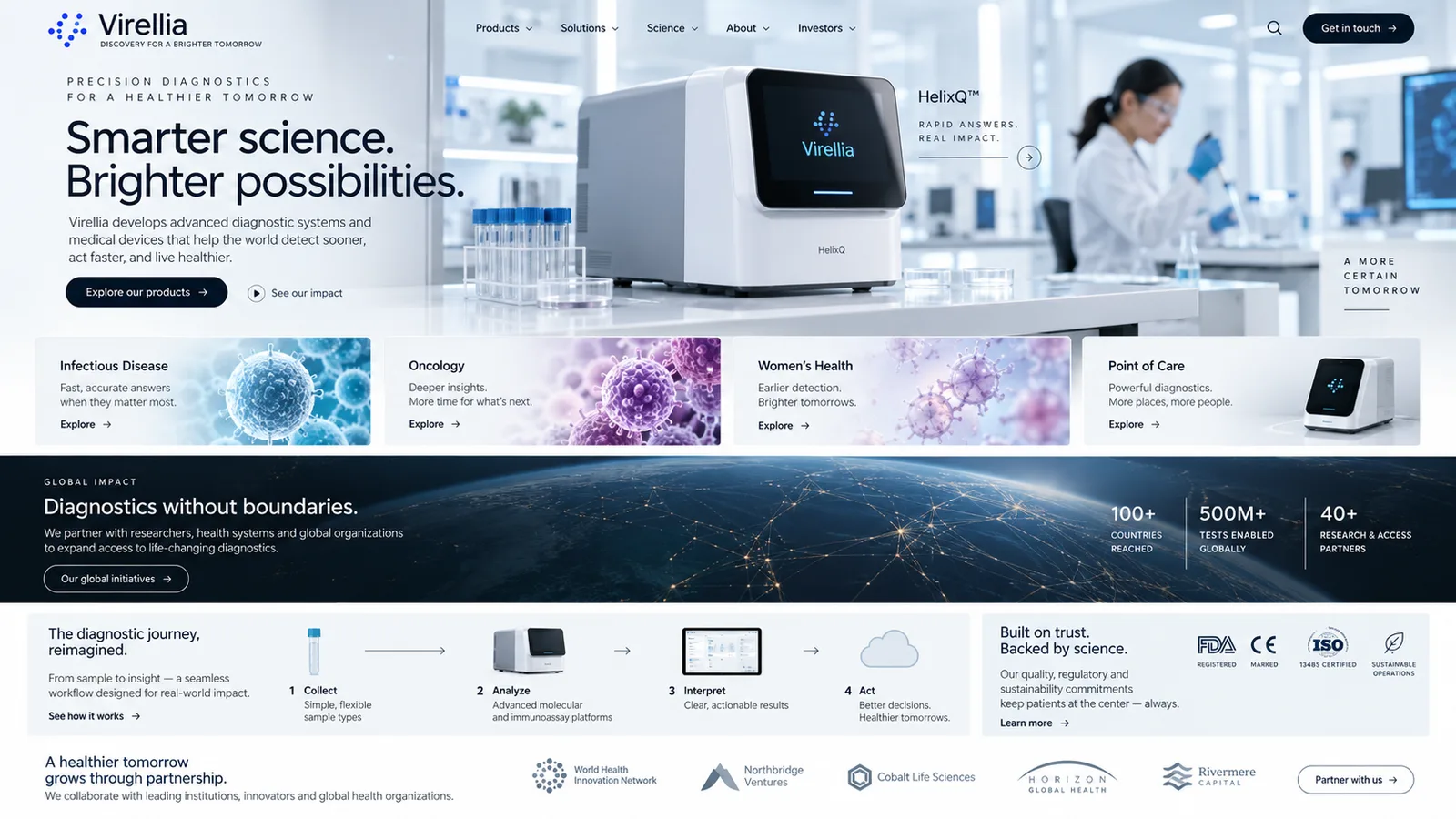
Can a diagnostics platform present technical detail without hiding the benefit?
Follow the audience question, the visual response, the build and the task that would test it.
Separate the questions of laboratory, procurement and clinical audiences, and identify the evidence each must review.
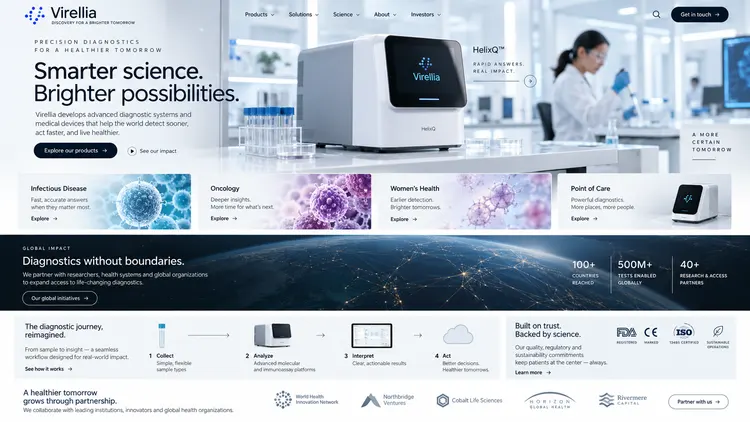
A product-led opening leads into workflow, technologies and evidence routes.
Layer a product overview, workflow explanation, approved specifications and evidence links before the specialist enquiry.
Review specifications and performance claims with a qualified owner.
Product-led lab imagery signals relevance; a visible workflow makes the technical offer easier to interpret.
Approved detail near the product story helps a specialist decide whether to request a technical discussion.
Test specification comprehension, evidence discovery and enquiries from appropriately qualified buyers.
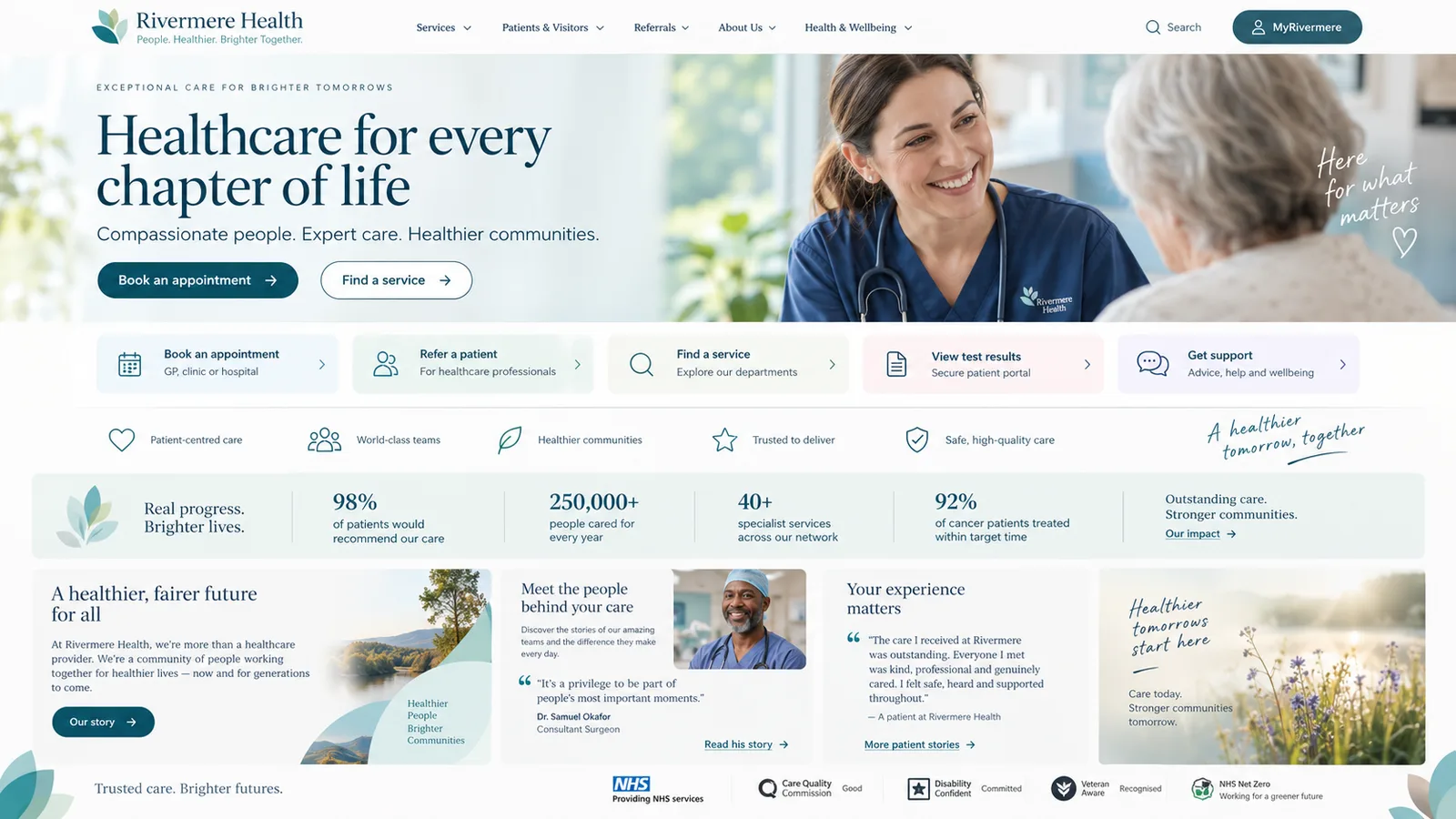
How can a healthcare service make the right care route obvious?
Follow the audience question, the visual response, the build and the task that would test it.
Map how different users describe their care need, then review consent and clinical wording with responsible professionals.
People-focused imagery leads to care pathways, teams and appointment actions.
Create service-specific care paths with team details, eligibility guidance and an accessible appointment step.
Test wayfinding and consent with representative users; validate clinical language.
People-focused photography adds warmth; simple care-route choices direct attention toward the right service.
Understanding the service and its next step makes an appointment request more informed and appropriate.
Check correct service selection, consent understanding, appointment starts and avoidable wrong-route enquiries.
The visual shift follows a specific buyer question. Open each example for the method, page decision and test.
Print, brand and live-experience directions pair spectacle with service detail and a clear project route.
Start with the decision your customer needs to make or the task your team needs to complete. We will scope the work around that.
Our team keeps an eye on changing markets, buyer behaviour, search habits and competing suppliers across 77 sectors. We bring that work together in our in-house sector research database, alongside current studies and the research context in our 2011–2026 reference archive.
Researchers use that shared context to shape the questions, copy, design and tests for your business. Interviews, focus groups, usability sessions and appropriate A/B tests add evidence specific to your buyers. Findings stay connected to the sector, buying role and task, so the whole website works towards the same purpose.
We build privately and take you through three review checks. Request your refund before final approval or authorised public deployment, whichever happens first, and we return 100% of covered website fees, including VAT. No questions asked.
Your peace of mind comes first. We listen to your feedback, refine the details and walk you through your website before you approve it.
We apply the ISO 9001 quality management method and the ISO/IEC 27001 information security method across research, design, development, release and ongoing improvement. Each connects the work to named owners, checks and reviewable records.
We define the buyer task and acceptance criteria, record research and design decisions, review changes, test the agreed journeys and approve the release against its requirements.
We map information flows, assess risks, choose relevant controls and review access, suppliers and changes. Backup and response checks inform the next security review.